When searching for the price of a 1 kg sugar, rice, and legumes filling and packaging machine, package weight is not the only factor that determines the final cost. The price also depends on the weighing system, production speed, automation level, packaging material, bag format, and the additional equipment required to complete the production line.
There is no single price that applies to every factory. A small packaging business may only require a semi-automatic weighing machine, while a food manufacturer supplying supermarkets or private-label brands may need a fully automatic line that weighs the product, forms the bag, fills it, seals it, cuts it, and prints the production date.
For this reason, the machine should be selected according to the actual production requirements rather than the lowest available purchase price.
How Much Does a 1 KG Sugar, Rice, and Legumes Packing Machine Cost?
The price varies considerably depending on the machine configuration and production capacity. Basic or used packaging equipment may start from relatively low price levels, while fully automatic machines and multihead weighing lines require a larger investment.
The general cost level can be classified as follows:
| Machine Type | Suitable Application | Cost Level |
|---|---|---|
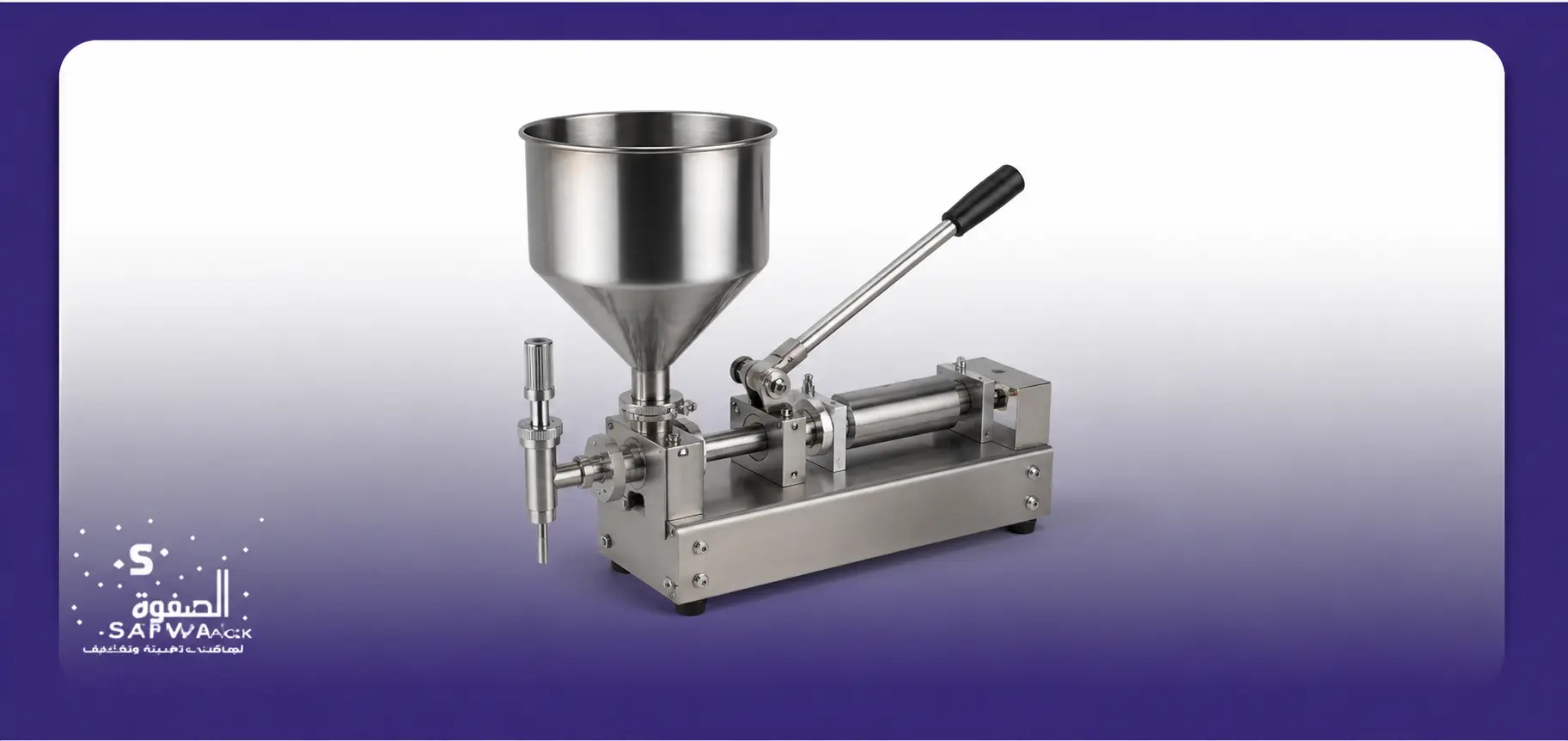
| Semi-automatic weighing machine | Small and medium production using pre-made bags | Lower |
| Automatic volumetric filling machine | Products with stable density and regular production | Medium |
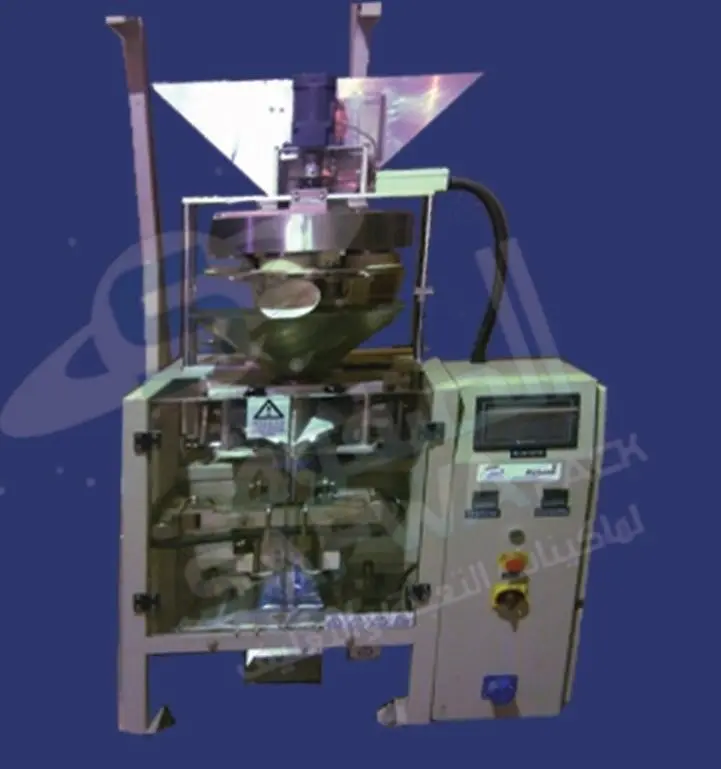
| Automatic weighing and packing machine | Sugar, rice, grains, and different legumes | Medium to high |
| Multihead weighing line | High-output industrial factories | Higher |
| Complete line with conveyors and coding | Products prepared for distribution and retail | Based on configuration |
A realistic price comparison should always be made between machines with similar specifications, production speeds, weighing systems, and included accessories.
Comparing a basic semi-automatic filler with a complete automatic packaging line will not provide an accurate picture of the required investment.
Why Is “1 KG Packing Machine” Not Enough Information?
Requesting a machine that fills one-kilogram bags may appear specific, but suppliers still need additional technical information before recommending the correct equipment.
Sugar, rice, lentils, beans, chickpeas, and other dry food products behave differently during feeding and weighing. They vary in particle size, bulk density, flowability, dust level, and moisture sensitivity.
Before determining the price of a 1 kg sugar, rice, and legumes filling and packaging machine, the following questions should be answered:
-
Will the machine package one product or several products?
-
Is one kilogram the only required weight?
-
Will the factory also produce 250-gram or 500-gram packages?
-
Will the machine use pre-made bags or packaging film rolls?
-
How many bags must be produced per minute?
-
Is a photocell system required for printed film?
-
Does the line need a date coder or batch number printer?
-
Will the product be fed manually or through an elevator?
-
Is a semi-automatic or fully automatic system required?
-
How many hours will the machine operate every day?
These details help prevent the factory from purchasing a machine that is cheaper initially but unable to meet the required output or handle all products efficiently.
Weighing System or Volumetric Filling System?
The filling mechanism is one of the most important factors affecting machine price, accuracy, flexibility, and production performance.
Machines used for sugar, rice, grains, and legumes generally rely on either a volumetric filling system or a weight-based filling system.
Volumetric Filling System
A volumetric machine measures the product through a fixed-volume cup or dosing chamber.
This system is generally simple, fast, and economical. It can be suitable for products with consistent particle size and stable bulk density.
However, when the density or particle size changes, the actual weight inside the bag may also change. This can make volumetric filling less flexible when a factory packages several different products on the same line.
Weight-Based Filling System
A weight-based machine measures the actual product weight before releasing it into the package.
This system offers greater flexibility when handling sugar, rice, beans, lentils, chickpeas, and other products with different densities and particle sizes.
| Comparison | Volumetric System | Weighing System |
|---|---|---|
| Measurement method | Product volume | Actual product weight |
| Initial cost | Usually lower | Usually higher |
| Product flexibility | Limited | Greater |
| One-kilogram accuracy | Affected by product density | More consistent |
| Best application | One stable product | Multiple grains and legumes |
For a B2B manufacturer planning to package sugar, rice, and several types of legumes on the same line, a weighing system is generally the more flexible option.
Suitable El Safwa Machine for Packages up to 1 KG
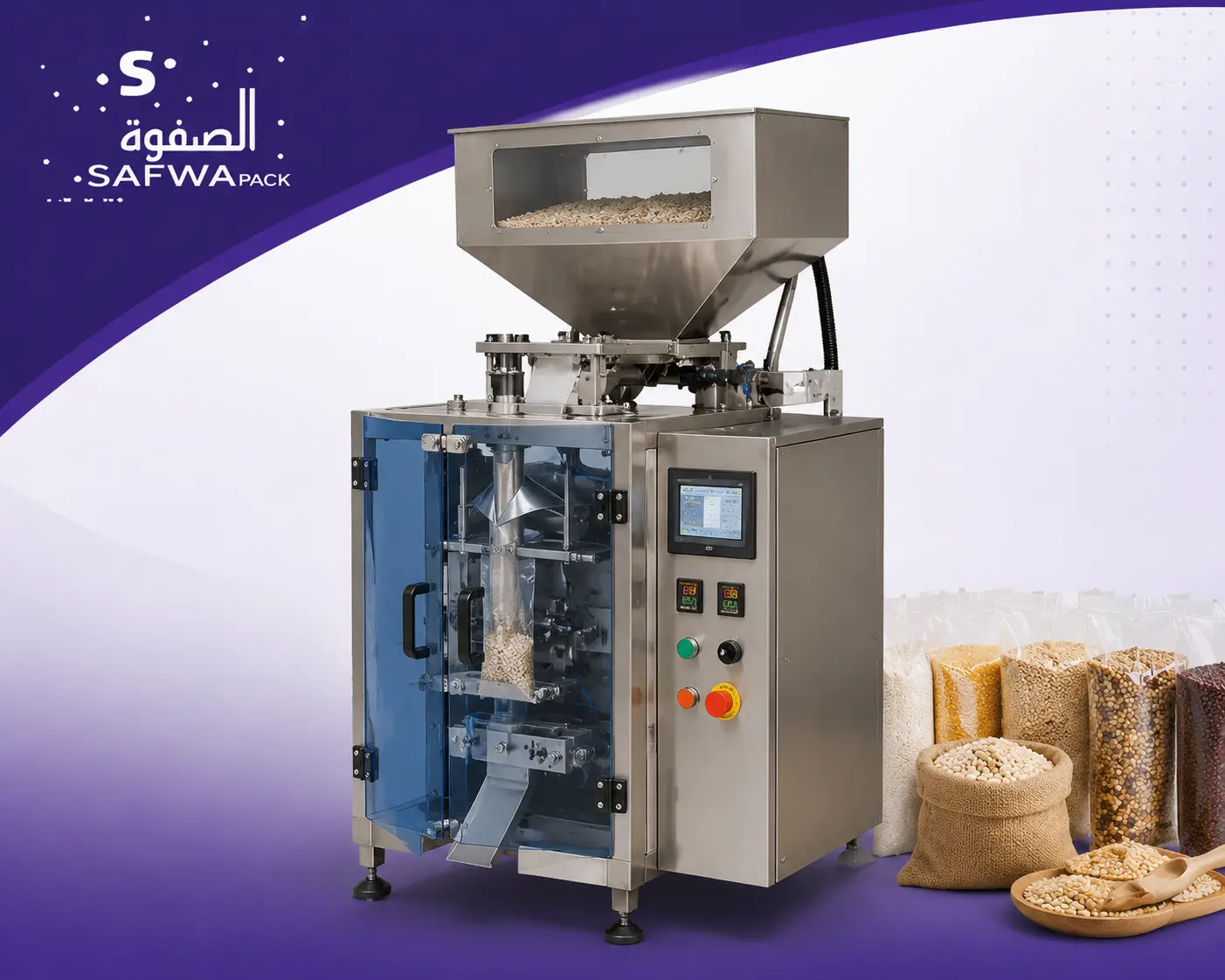
One of the relevant solutions available from El Safwa is the 10-head weighing and packaging machine for weights from 10 grams to 1,000 grams.
The machine uses multiple weighing heads to improve production speed and control the quantity placed inside every bag.
Its published specifications include:
| Specification | Details |
|---|---|
| Number of weighing heads | 10 heads |
| Filling range | 10 to 1,000 grams |
| Production speed | Approximately 20 to 60 bags per minute |
| Filling accuracy | Approximately ±1%, depending on the product |
| Control system | PLC with touchscreen |
| Electrical supply | 220 or 380 volts, depending on configuration |
| Machine structure | Stainless-steel construction |
These specifications make the machine a potential solution for factories that need to package products in bags weighing up to one kilogram at a relatively high speed.
However, a production trial should be completed using an actual sample of sugar, rice, or legumes before the final selection. Product flowability and particle size directly affect feeding performance and actual operating speed.
Defining these requirements accurately also helps the buyer receive a realistic price of a 1 kg sugar, rice, and legumes filling and packaging machine based on the factory’s production needs.
What Is the Expected Production Capacity?
Machine price should not be evaluated separately from production capacity. A machine with a higher purchase cost may generate a lower cost per bag when operated efficiently.
The theoretical hourly output can be calculated as follows:
Hourly output = Number of bags per minute × 60
If a machine produces between 20 and 60 bags per minute, its theoretical output ranges from 1,200 to 3,600 bags per hour.
When each bag contains one kilogram, the theoretical capacity may range between 1.2 and 3.6 tonnes per hour.
Actual production capacity is usually lower because of:
-
Product feeding interruptions.
-
Packaging film replacement.
-
Cleaning between different products.
-
Weight calibration.
-
Routine maintenance.
-
Bag size changes.
-
Operator experience.
-
Product flowability.
-
Production-line stoppages.
The factory should therefore request a practical test instead of relying only on the maximum speed stated in the machine specifications.
Can One Machine Package Sugar, Rice, and Legumes?
Yes. One weight-based packaging machine can often handle several granular products, provided that the feeding and weighing systems can be adjusted for different particle sizes and flow characteristics.
When operating several products on one line, the factory should verify:
-
Ease of cleaning the product-contact parts.
-
Ability to control vibration and feeding speed.
-
Compatibility with different target weights.
-
Easy removal of trapped grains.
-
Ability to change bag dimensions.
-
Fast switching between product settings.
-
Availability of saved product recipes on the control panel.
-
Food-grade construction of all contact surfaces.
Factories that mainly package sugar can also review this guide about choosing a suitable sugar filling machine.
Factors Affecting the Price of a 1 KG Packing Machine
Level of Automation
A semi-automatic machine generally requires an operator to position the bag and move it to the sealing stage.
A fully automatic line can form the bag, weigh the product, fill it, seal it, cut it, and prepare it for the next production stage with limited operator intervention.
The more processes the machine performs automatically, the higher the initial investment is likely to be.
However, automation can reduce labor dependency and improve production consistency over time.
Number of Weighing Heads
Single-head weighing machines are generally more affordable but may operate more slowly than machines equipped with four, ten, or fourteen weighing heads.
A multihead weigher uses several weight combinations to reach the target quantity quickly and accurately.
The correct number of heads depends on the required output, product characteristics, and available budget.
Production Speed
A factory producing ten bags per minute has different technical requirements from a facility targeting fifty or sixty bags per minute.
Higher production speeds may require:
-
A larger feeding elevator.
-
Faster sealing systems.
-
More advanced control components.
-
Product discharge conveyors.
-
Higher-capacity motors.
-
Continuous product feeding.
Production speed should therefore be calculated according to expected purchase orders and daily operating hours.
Bag Type and Dimensions
Machine configuration also depends on the required package format.
The line may need to handle:
-
Polyethylene bags.
-
Laminated packaging film.
-
Printed film with registration marks.
-
Center-seal bags.
-
Three-side-seal bags.
-
Four-side-seal bags.
-
Pillow bags.
-
Pre-made pouches.
-
Film rolls formed inside the machine.
A sample bag or packaging film specification should be provided before requesting the final quotation.
Printing and Inspection Equipment
Food manufacturers may require additional equipment such as:
-
Production and expiry date printers.
-
Batch number coding systems.
-
Inkjet printers.
-
Checkweighers.
-
Metal detectors.
-
Automatic rejection systems.
-
Labeling equipment.
These additions increase the investment but may be essential for companies supplying supermarkets, distributors, export markets, or private-label customers.
Construction Materials
For food packaging applications, the machine should be manufactured using materials suitable for contact with food.
The product-contact parts should be easy to remove, clean, and sanitize. Stainless-steel surfaces also provide better resistance to corrosion, moisture, and repeated cleaning.
Feeding and Line Accessories
A quotation may include only the filling machine, while the actual production line may also require:
-
Product feeding elevator.
-
Output conveyor.
-
Air compressor.
-
Date coder.
-
Bag former.
-
Sealing unit.
-
Finished-product collection table.
-
Weight inspection system.
For this reason, the factory should evaluate the complete range of required filling and packaging machines instead of calculating the budget based only on the main filler.
Warranty and After-Sales Support
The actual cost of a packaging machine is not limited to the purchase price.
It also includes:
-
Machine downtime.
-
Spare-part availability.
-
Maintenance expenses.
-
Operator training.
-
Technical support.
-
Installation and commissioning.
-
Future modifications.
Reliable after-sales support can be more valuable than saving a limited amount on the initial purchase.
Semi-Automatic Machine or Fully Automatic Line?
| Comparison | Semi-Automatic Machine | Fully Automatic Line |
|---|---|---|
| Initial investment | Lower | Higher |
| Labor requirements | Higher | Lower |
| Production speed | Low to medium | Medium to high |
| Package consistency | Partially operator-dependent | More consistent |
| Product changeover | Usually simple | Requires line adjustment |
| Space requirements | Limited | Larger |
| Best suited for | Startups and moderate production | Industrial and continuous production |
A semi-automatic machine may be more appropriate when production volumes are still limited or customer orders vary significantly.
A fully automatic line becomes more practical when the factory has stable contracts, high daily production targets, or a need to reduce reliance on manual labor.
How to Calculate the Return on Investment
The cheapest machine is not necessarily the most profitable option.
Factories should calculate the expected operational savings and additional output generated by the new equipment.
A simple calculation is:
Payback period = Total machine investment ÷ Monthly net savings
Monthly savings may include:
-
Reduced labor expenses.
-
Lower product giveaway caused by overweight bags.
-
Higher daily output.
-
Fewer rejected packages.
-
Lower rework requirements.
-
Ability to accept larger contracts.
-
Reduced product waste.
Electricity, maintenance, packaging materials, and spare parts should also be deducted when calculating the net return.
For example, adding a few uncontrolled grams to thousands of bags can result in a significant quantity of lost product every month.
Therefore, the price of a 1 kg sugar, rice, and legumes filling and packaging machine should not be evaluated separately from weighing accuracy. The machine should be tested under actual operating conditions rather than judged only by its production speed.
Information Required for an Accurate Quotation
Before contacting a packaging-machine supplier, prepare the following information:
-
The products that will be packaged.
-
The minimum and maximum package weights.
-
The required number of bags per minute or hour.
-
Daily operating hours and work shifts.
-
Bag dimensions and packaging material.
-
Whether the bag is printed or transparent.
-
Whether pre-made bags or film rolls will be used.
-
Available electrical supply.
-
Available factory space.
-
Required coding or inspection equipment.
-
Preferred automation level.
-
Expected future production expansion.
-
Factory layout and product feeding method.
-
Cleaning and product-change requirements.
Providing complete information allows the supplier to prepare a more accurate technical and commercial quotation without unexpected additions later.
Common Mistakes When Buying a Packing Machine
Several purchasing mistakes can increase the total project cost after installation.
These include:
-
Choosing the machine only because it has the lowest price.
-
Failing to test the machine with the actual product.
-
Selecting a volumetric system for products with changing densities.
-
Ignoring packaging film specifications.
-
Failing to confirm spare-part availability.
-
Overlooking electricity and compressed-air requirements.
-
Purchasing a machine that cannot be upgraded.
-
Depending on maximum advertised speed.
-
Failing to define installation and training responsibilities.
-
Ignoring cleaning requirements between products.
-
Buying a machine that cannot handle future package sizes.
When comparing packaging companies, the buyer should request a detailed technical offer that clearly lists the machine components, production capacity, warranty, included accessories, and after-sales services.
A quotation containing only a total price is not enough for an accurate comparison.
Can the Same Machine Package Liquids?
No. A machine designed for sugar, rice, and legumes cannot normally be used for liquid products.
Liquids require pumps, nozzles, valves, and dosing systems selected according to viscosity, foaming behavior, temperature, and container type.
If the factory plans to package oils, detergents, juices, sauces, or other liquid products, it should install a separate line and select a suitable liquid filling machine.
Why Choose El Safwa for Your Packaging Line?
El Safwa provides a wide range of filling and packaging solutions for food and industrial applications.
Available solutions include weight-based filling machines, semi-automatic systems, multihead weighing lines, sealing equipment, conveyors, coding systems, and other production-line accessories.
Machine selection starts with studying the product, package weight, bag format, target output, and available factory space.
This approach helps identify a technically suitable solution instead of recommending the same machine for every project.
Contact El Safwa and provide a product sample, bag dimensions, and required production capacity to learn the price of a 1 kg sugar, rice, and legumes filling and packaging machine and receive a technical recommendation and quotation based on your factory’s actual requirements.
Frequently Asked Questions
How much does a 1 KG sugar, rice, and legumes packing machine cost?
The price depends on the filling system, production speed, level of automation, number of weighing heads, bag type, and additional equipment included in the line.
Can one machine package sugar, rice, and different legumes?
Yes. A flexible weight-based machine can often package several granular products, provided that its feeding and weighing settings can be adjusted for each product.
Is a weighing system better than a volumetric filling system?
A weighing system is generally more flexible for products with different densities and particle sizes. A volumetric system may be more economical for one product with stable characteristics.
Can the same machine fill 250-gram, 500-gram, and 1-kilogram bags?
Yes, provided that the machine’s filling range covers these weights and the bag-forming and sealing system supports the required package dimensions.
What is the production speed of a sugar and rice packing machine?
Production speed depends on the machine model, target weight, product flowability, bag dimensions, and packaging material. Multihead weighing systems may produce dozens of bags per minute.
Does the machine require an air compressor?
Some pneumatic machines and accessories require compressed air, while other systems operate mainly using electrical components. The technical requirements should be checked before installation.
Can a date printer be added to the packaging line?
Yes. The line can be equipped with a date coder, inkjet printer, or thermal-transfer printer depending on the packaging material and required print quality.
Is a new or used packaging machine better?
A used machine may reduce the initial investment, but its weighing system, sealing unit, control panel, motors, and spare-part availability must be inspected carefully. A new machine generally provides clearer warranty and support conditions.
What should be tested before purchasing the machine?
The factory should test weighing accuracy, actual production speed, sealing quality, product feeding, packaging-film movement, bag dimensions, cleaning, and product changeover using the real product.
What information is needed to request a quotation?
The supplier will usually need the product type, package weight, target speed, bag format, packaging material, required automation level, available electricity, factory space, and additional equipment.