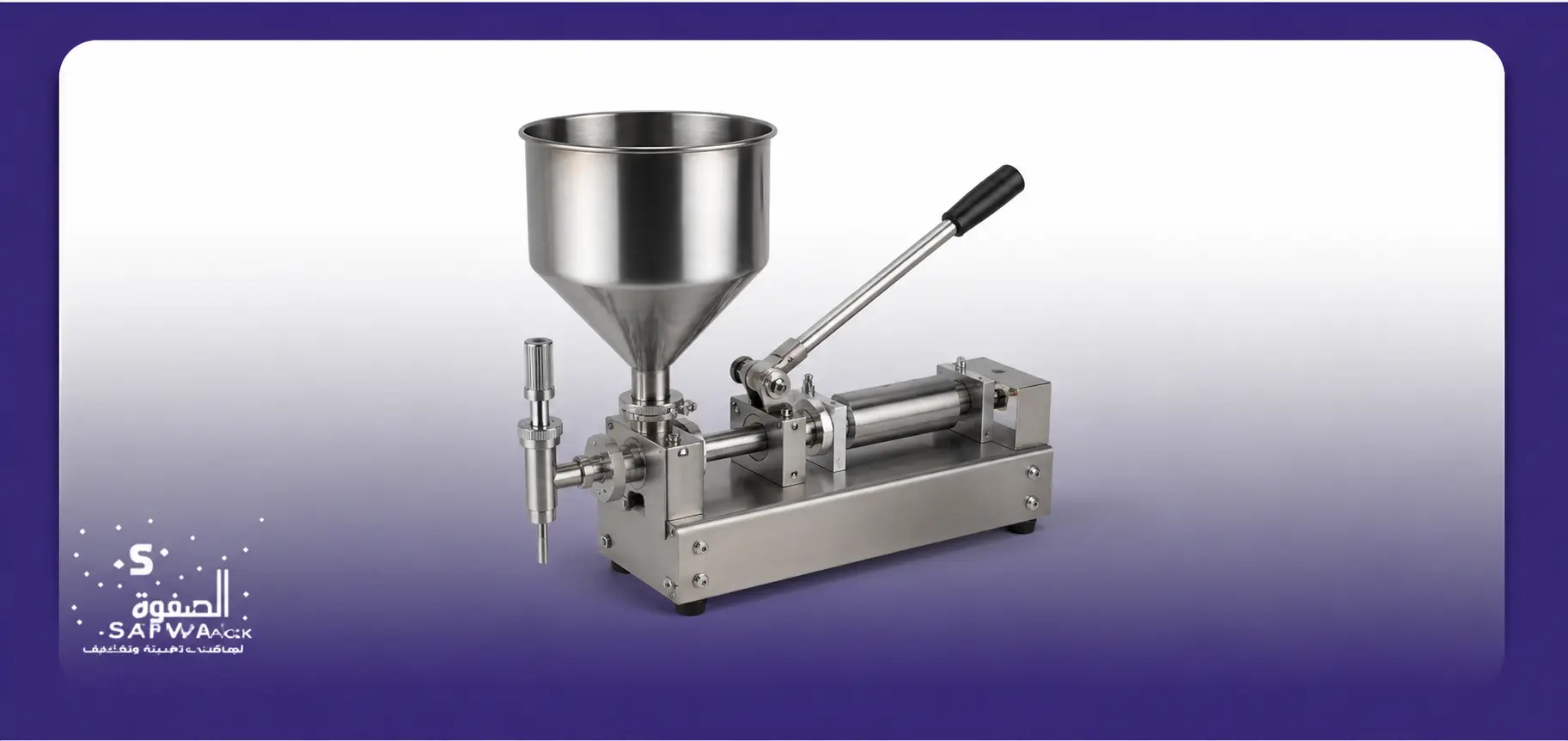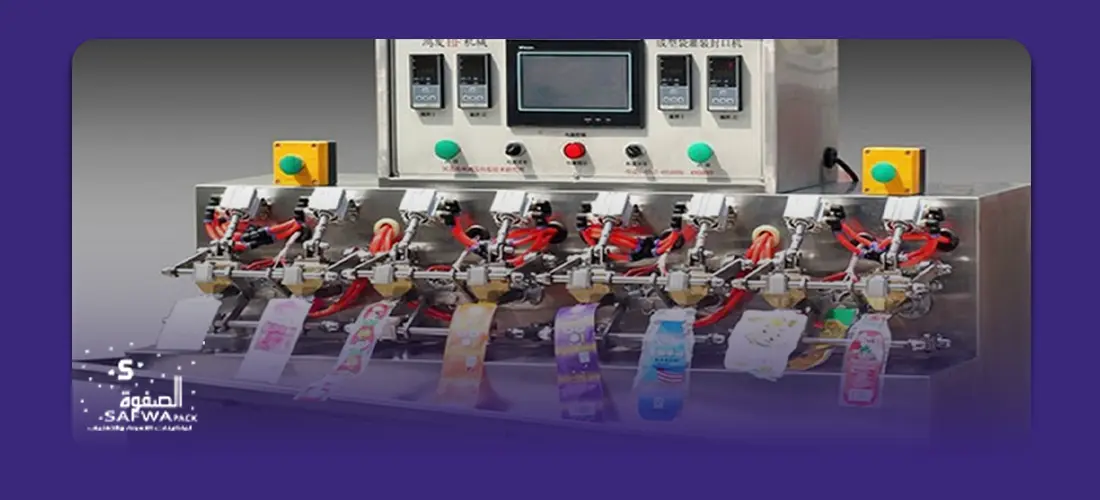
In light of the rapid industrial development in the Egyptian market, liquid filling machines have become a fundamental component within modern production lines, especially in water, oil, detergent, and juice factories.
With the increasing demand for liquid products and rising competition, relying on manual filling is no longer sufficient. Using an automatic liquid filling machine has become essential to ensure accuracy, reduce waste, and improve production quality.
Al-Safwa Packaging Machines Company provides integrated solutions including the design, supply, installation, and operation of liquid filling lines suited to factories of various sizes across Egypt.
The Importance of Liquid Filling Machines for Factories
Liquid filling machines help improve production efficiency within factories through several advantages, most notably:
- Achieving high accuracy in fill quantities within each container
- Reducing waste resulting from manual errors
- Significantly increasing production speed
- Reducing reliance on manual labor
- Ensuring consistent final product quality
Using a liquid filling machine within production lines leads to improved operational efficiency and reduced costs in the long run.
Types of Liquid Filling Machines Based on Product Nature
Liquid filling machines vary depending on the nature of the liquid used, and can be divided into the following types:
Light Liquid Filling Machines
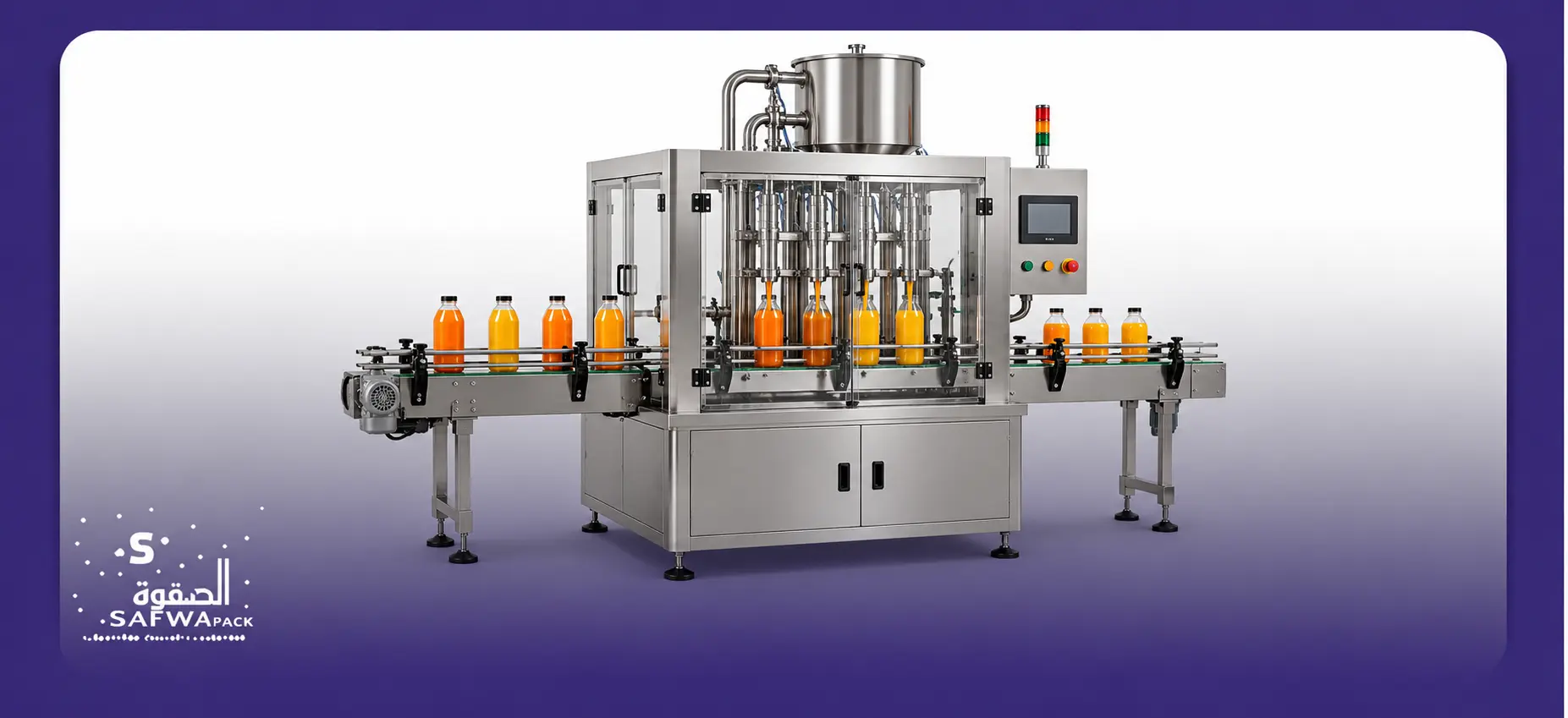
Used for low-viscosity liquids such as water, juices, and various beverages. They generally rely on volumetric or automatic filling systems and are characterized by high production speed and accuracy suitable for fast filling.
Medium and Viscous Liquid Filling Machines
Used for denser products such as oils, detergents, and chemicals. They rely on precise pumping or weighing systems to control quantity, providing higher control over filling to ensure consistent quantity within each container.
Al-Safwa offers integrated solutions in the field of filling and packaging machines suitable for all industrial production lines.
Choosing the Right Liquid Filling Machine
Choosing a liquid filling machine depends on several key factors that should be considered before purchasing, including:
- The type of liquid, whether light or viscous
- The type of container used, whether bottles, bags, or plastic containers
- The required production capacity for the factory
- The need for an automatic or semi-automatic system
- The possibility of integrating the machine within a complete liquid filling line
The prices of liquid filling machines also vary depending on technical capabilities, number of heads, and production capacity.
For more on:
- Salt filling and packaging machine price
- Filling and packaging machine prices
The Difference Between a Standalone Machine and a Complete Liquid Filling Line
The appropriate filling system can be chosen based on the project size:
Standalone Machine
Used in small and medium-sized projects, characterized by lower cost and simple operation.
Complete Liquid Filling Line
Used in large factories, comprising multiple stages such as filling, sealing, and packaging. It provides continuous production without interruption and achieves higher efficiency compared to individual machines.
Technical Specifications of Liquid Filling Machines
The efficiency of liquid filling machines depends on a set of important technical specifications, including:
Number of Heads and Production Speed
The more filling heads a machine has, the greater its production capacity, as some multi-head machines can produce thousands of containers per hour.
Machine Compatibility with Containers
The machine must be capable of handling different types and sizes of containers such as bottles, plastic containers, or bags, with the ability to easily adjust the fill volume.
Manufacturing Material
Liquid filling machines are made of food-grade stainless steel to ensure product quality is maintained and contamination is prevented, especially in food industries such as water and juice filling.
Applications of Al-Safwa's Liquid Filling Machines
Al-Safwa Company offers a diverse range of liquid filling machines suitable for various industries, including:
24-Head Automatic Liquid Filling Machine
Used in large production lines, offering high speed and filling accuracy, suitable for filling water, juices, and various liquid products.
Liquid Filling Machine for Bags
Used for filling liquid products into ready-made bags, suitable for juices and certain food products, and can be integrated with bag sealing systems.
Weight-Based Liquid Filling Machine
Relies on a precise weight-measuring system during filling, primarily used for filling oils and chemicals, offering high accuracy and reduced waste.
The Role of Liquid Filling Machines in Reducing Waste and Increasing Profitability
Using liquid filling machines contributes to improving operational efficiency within factories through:
- Reducing waste resulting from manual filling
- Ensuring accurate product distribution within each container
- Reducing daily operating costs
- Continuously raising production capacity
This ultimately leads to increased profitability and improved final product quality.
The Importance of Regular Maintenance
Regular maintenance of liquid filling machines is an essential element for ensuring continued high-efficiency operation, as it helps with:
- Reducing sudden breakdowns
- Extending machine lifespan
- Maintaining performance accuracy
- Reducing repair costs
Why Choose Al-Safwa for Packaging Machines
Al-Safwa Company, one of the best packaging and filling companies, offers integrated solutions in the field of liquid filling machines, including:
- Designing complete production lines based on client needs
- Providing machines suited to different types of liquids
- Professional installation and operation
- Continuous technical support and maintenance
- Experience across multiple sectors such as food, chemical, and detergent industries