With the rapid development of the industrial sector, filling and packaging machines have become an essential part of every factory and production project. They directly affect final product quality, operating efficiency, and waste reduction.
As competition increases in the Egyptian market, relying on advanced filling and packaging machines and production lines is no longer a luxury. It has become a genuine requirement for the success of any production project.
In this article, we will explain the types of filling and packaging machines, their applications and importance, how to choose the right machine for your project, the main factors affecting machine prices, and the best available solutions in Egypt.
What Are Filling and Packaging Machines?
Filling and packaging machines are specialized industrial equipment used to fill products such as food, chemicals, grains, and liquids before packaging them in a way that preserves quality and extends shelf life.
They are available in several types according to their application, including:
-
Liquid filling machines.
-
Grain filling machines.
-
Sealing and packaging machines.
-
Vacuum packaging machines.
-
Complete production lines.
The Importance of Filling and Packaging Machines in Factories
Using filling and packaging machines is not simply a production improvement. It is a strategic element within any modern factory for several reasons:
-
Significantly increasing production speed.
-
Reducing raw-material waste.
-
Improving final product quality.
-
Reducing reliance on manual labor.
-
Increasing production-line efficiency.
-
Protecting products during storage and transportation.
-
Improving consistency between packages.
-
Supporting higher production volumes.
For this reason, most modern factories in Egypt use filling and packaging machines and integrated production lines instead of traditional manual methods.
If you want to develop your factory and increase production efficiency, choosing the right filling and packaging machines is the first practical step toward success.
Contact our team today so we can help you select filling, packaging, and production-line solutions suited to your business, budget, and required production capacity.
Types of Filling and Packaging Machines in Egypt
The Egyptian market offers a wide range of filling and packaging machines according to product type. The main categories include:
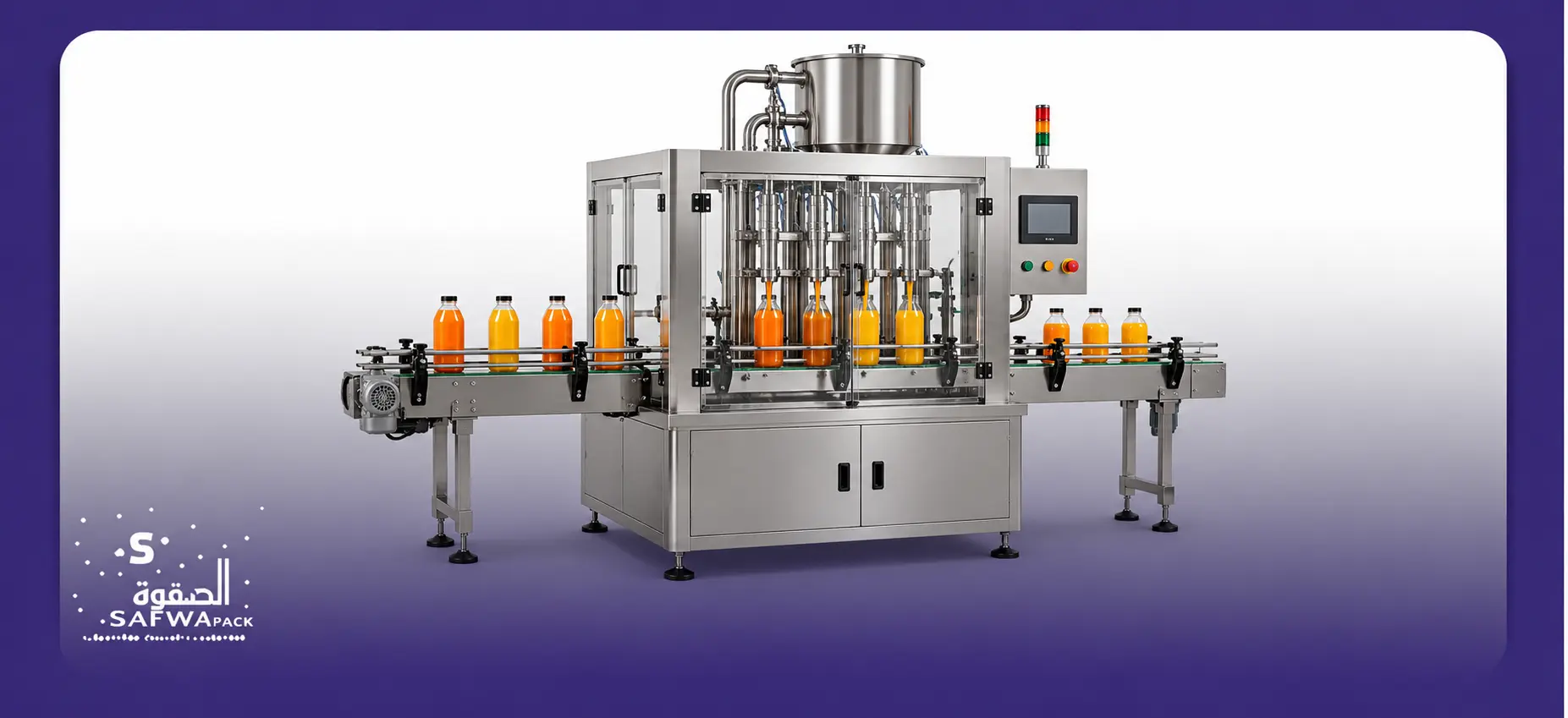
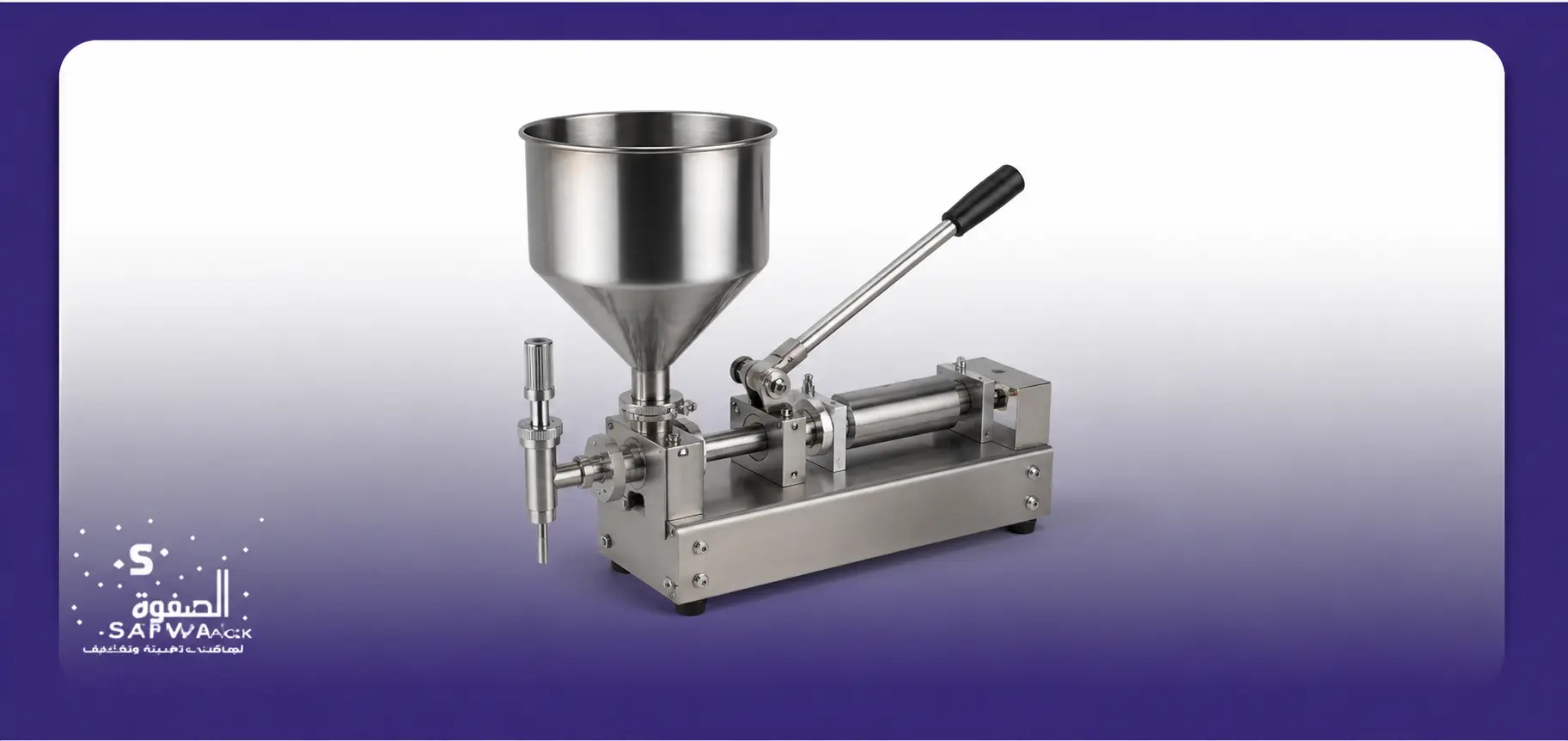
1. Liquid Filling Machines
These machines are used for products such as:
-
Oils.
-
Juices.
-
Detergents.
-
Chemicals.
-
Disinfectants.
-
Liquid cosmetics.
The suitable machine depends on liquid viscosity, container size, required production speed, and automation level.
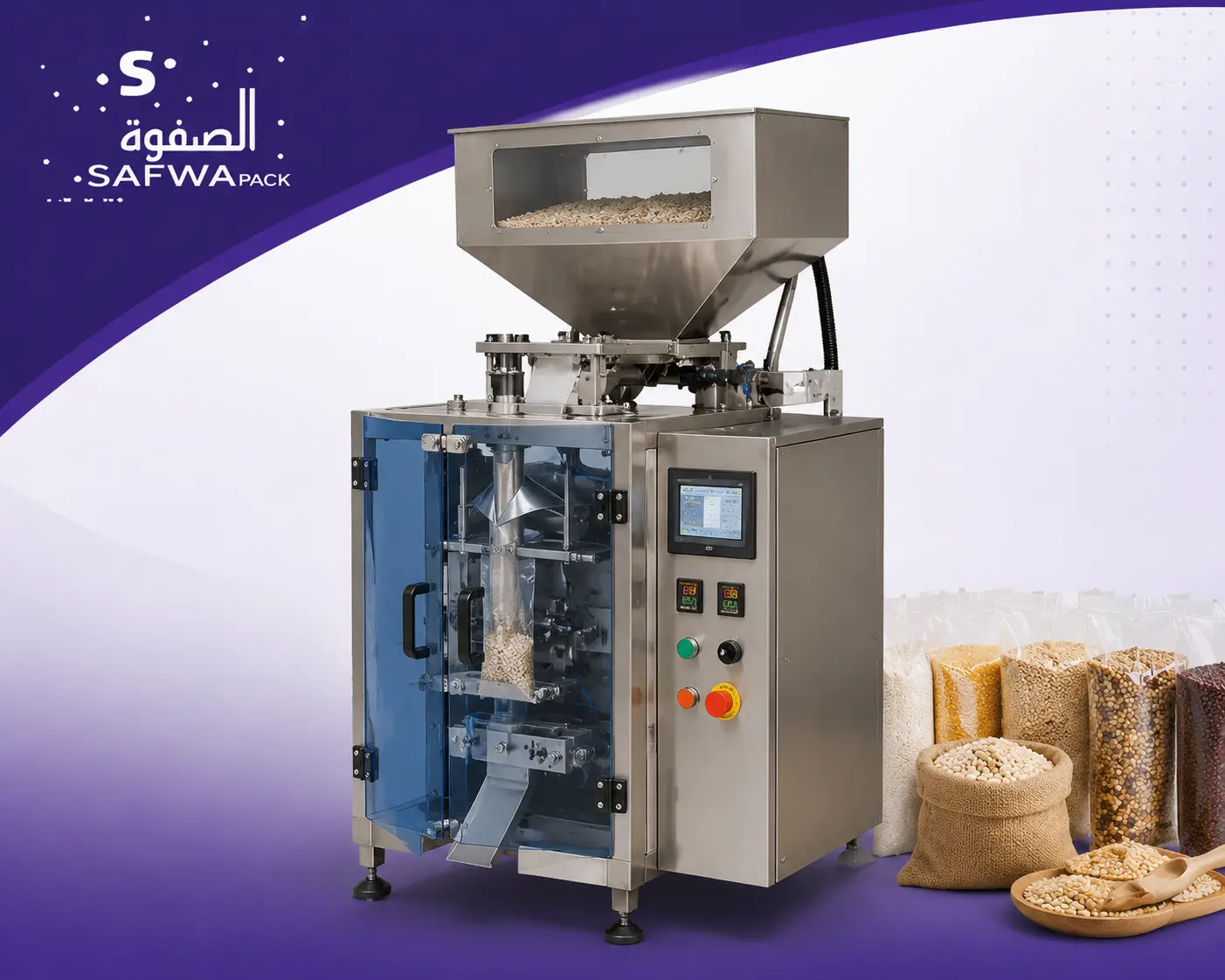
2. Grain Filling Machines
These machines are suitable for:
-
Rice.
-
Sugar.
-
Legumes.
-
Coffee.
-
Salt.
-
Nuts.
They commonly rely on weighing or volumetric measuring systems to achieve consistent filling quantities.
3. Spice Filling Machines
Spice filling machines are used in spice and powder packaging projects that require accurate dosing.
They should be selected according to powder density, flow behavior, package size, and requirements for reducing airborne product.
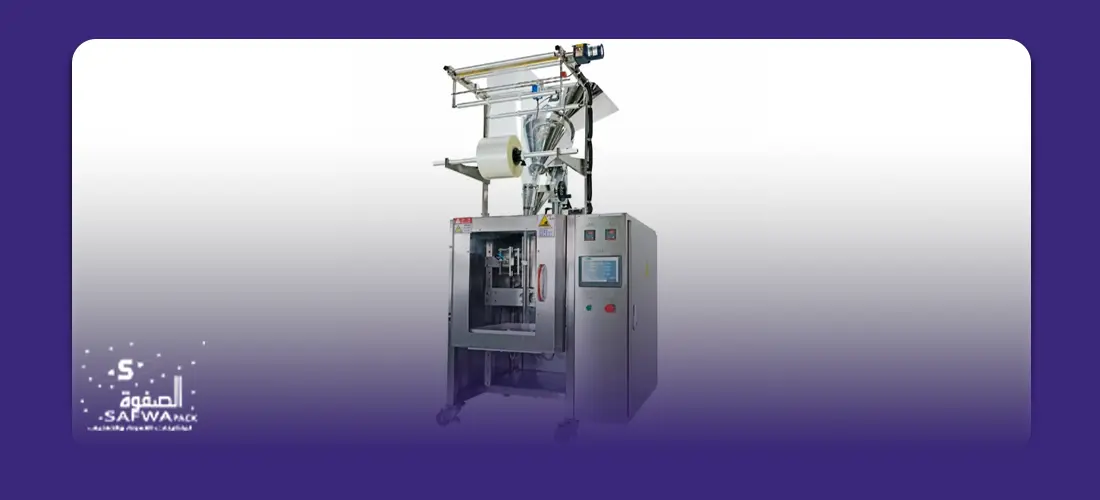
4. Sealing and Packaging Machines
These machines securely seal bags and packages to protect products from leakage, contamination, moisture, and air.
The sealing system should be compatible with the packaging material, bag thickness, and required production speed.
5. Thermoforming Vacuum Packaging Machines
These machines are important for packaging food products and protecting them from damage.
They form the packaging material, place or fill the product, remove air when required, and seal the package securely.
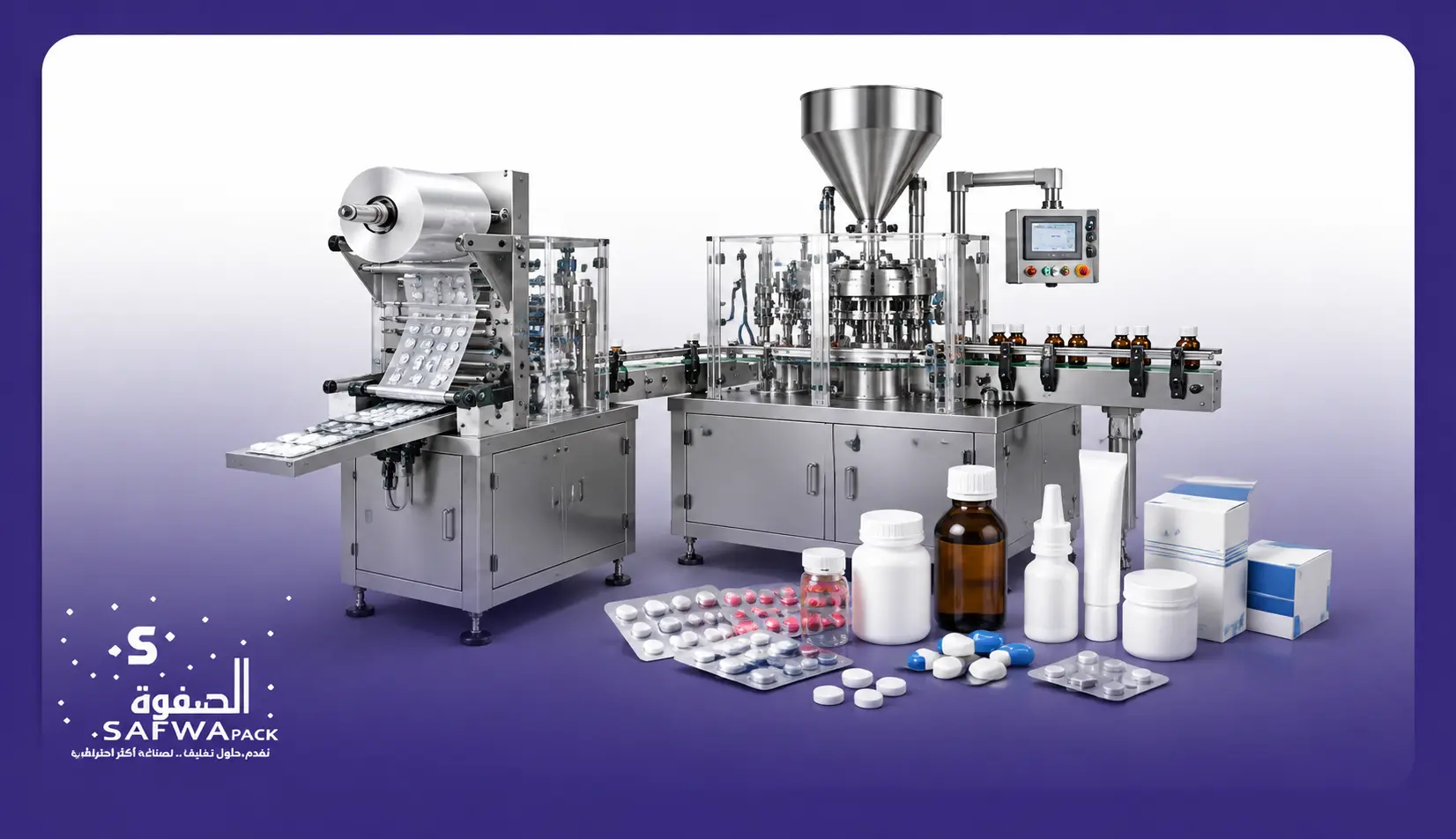
6. Integrated Production Lines
Complete production lines connect all production stages, from filling to final packaging.
Depending on the project, a production line may include:
-
Product-feeding systems.
-
Filling units.
-
Conveyors.
-
Capping or sealing machines.
-
Labeling machines.
-
Date printers.
-
Product-collection units.
Filling and Packaging Machines with Integrated Production Lines
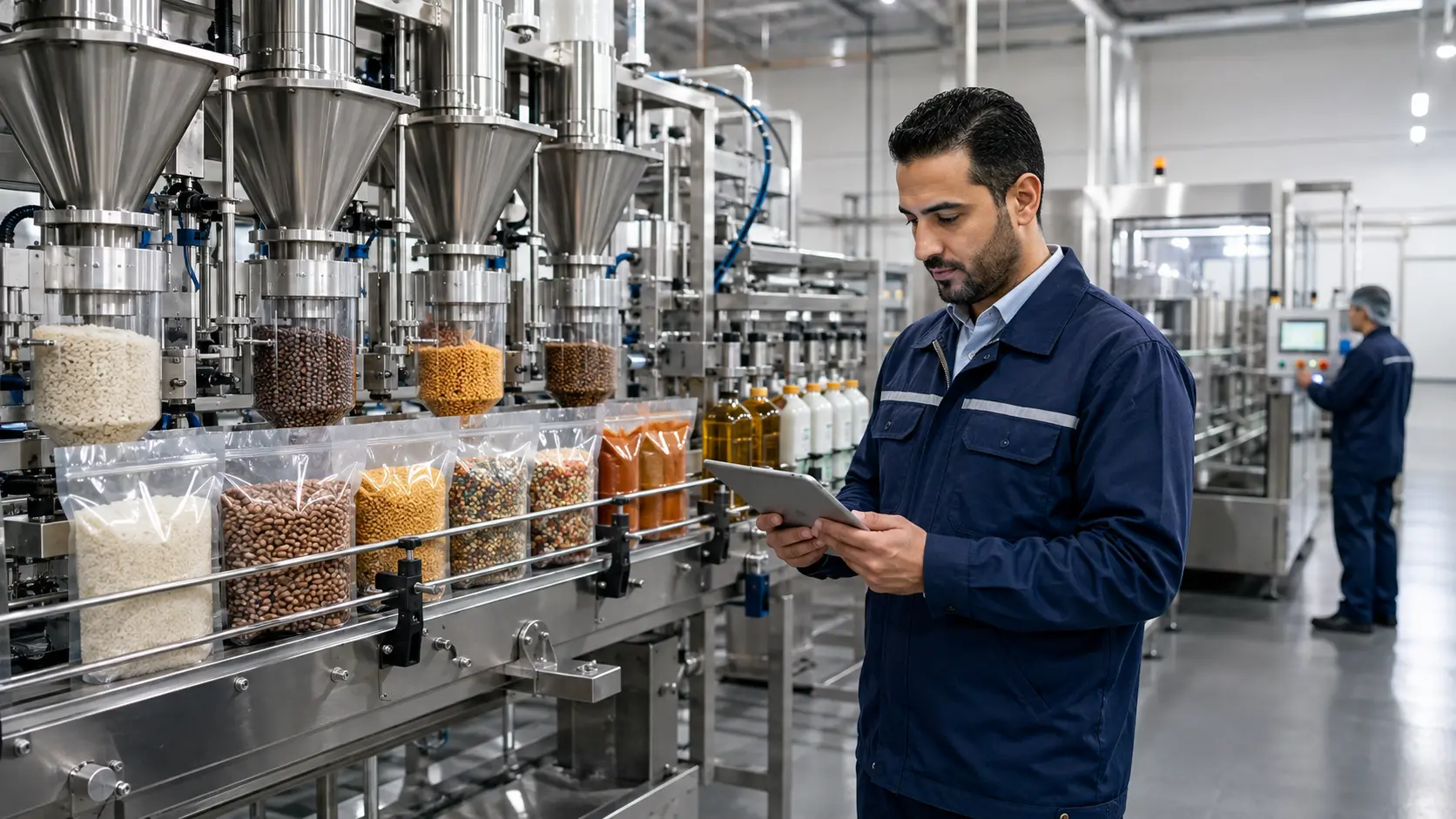
One of the most important developments in the industrial market is the shift from standalone machines to integrated filling, packaging, and production lines.
Integrated lines provide:
-
Faster production.
-
Consistent product quality.
-
Fewer human errors.
-
Lower long-term operating costs.
-
Reduced manual handling between stages.
-
Better control over the entire production process.
This makes them a suitable choice for medium and large factories in Egypt.
However, an integrated line should be designed according to the actual product, package, production capacity, available space, and future expansion plans.
Filling and Packaging Machine Prices in Egypt
Filling and packaging machine prices vary according to several important factors:
-
Machine type, such as liquid, grain, powder, or sealing equipment.
-
Production capacity.
-
Automation level: manual, semi-automatic, or automatic.
-
Country of manufacture.
-
Manufacturing materials and component quality.
-
Number of filling heads or operating lanes.
-
Whether the project requires a standalone machine or complete production line.
-
Additional units such as capping, labeling, and printing systems.
-
Installation, training, warranty, and after-sales services.
In general:
-
Small machines are available at economical prices suitable for startups.
-
Semi-automatic machines provide a balance between cost and productivity.
-
Automatic machines cost more but offer greater speed and consistency.
-
Integrated production lines require a higher initial investment but may reduce long-term production costs.
When comparing prices, project requirements should be determined first. The purchase price alone does not show the machine’s actual value or long-term operating cost.
How Do You Choose the Right Filling and Packaging Machine?
Choosing the right filling and packaging machine depends on several important factors:
-
The type and characteristics of the product.
-
Daily production volume.
-
Package type, size, and material.
-
Available factory space.
-
Project budget.
-
Required automation level.
-
Cleaning and maintenance requirements.
-
Availability of technical support and spare parts.
-
Potential for future expansion.
A small project may begin with one standalone or semi-automatic machine.
However, a medium or large factory with consistent demand may benefit more from an integrated filling and packaging line.
The Difference Between Traditional and Modern Factories
Traditional Factories
Traditional factories often:
-
Depend heavily on manual labor.
-
Operate at slower production speeds.
-
Have higher error rates.
-
Experience greater variation between packages.
-
Find it more difficult to increase production quickly.
Modern Factories
Modern factories usually:
-
Rely on filling and packaging machines.
-
Achieve faster and more accurate production.
-
Reduce long-term operating costs.
-
Maintain consistent filling and packaging quality.
-
Use fewer workers for repetitive tasks.
-
Expand production more efficiently.
This is why investing in machinery is considered a strategic decision for factories aiming for sustainable growth.
Small Filling and Packaging Machines for Startups
If you are launching a new project, several small filling and packaging machines may provide a suitable starting point.
They can help you:
-
Start with a lower investment.
-
Test market demand.
-
Produce limited quantities.
-
Improve product consistency.
-
Develop production gradually.
-
Gain operating experience before purchasing a larger line.
The machine should still be selected according to the product rather than price alone. A low-cost machine that does not match the product may cause waste, breakdowns, or inconsistent packages.
Small Filling Machines or Complete Production Lines?
This is a common question in the Egyptian market.
-
If your project is small and production is limited, one machine may be sufficient.
-
If you operate a factory or expect future expansion, an integrated production line may be the better choice.
-
If your product range changes frequently, a flexible standalone or semi-automatic machine may be more practical.
-
If production is continuous and standardized, an automatic line can reduce handling and improve consistency.
Your current demand and future plans should therefore be studied before making a purchase.
Why Is Investing in Filling and Packaging Machines Important?
Investing in filling and packaging machines is an essential step for industrial projects because it:
-
Improves product quality.
-
Increases competitiveness in the market.
-
Supports faster business growth.
-
Reduces dependence on manual labor.
-
Improves production consistency.
-
Reduces waste.
-
Helps factories meet larger orders.
-
Improves the final appearance of packages.
Filling and packaging machines have become essential to successful industrial projects. As the Egyptian market continues to develop, using advanced machinery and production lines is no longer optional—it is a genuine operational necessity.
If you want to develop your project or establish a new factory, choosing the right machine is the first step toward long-term success.