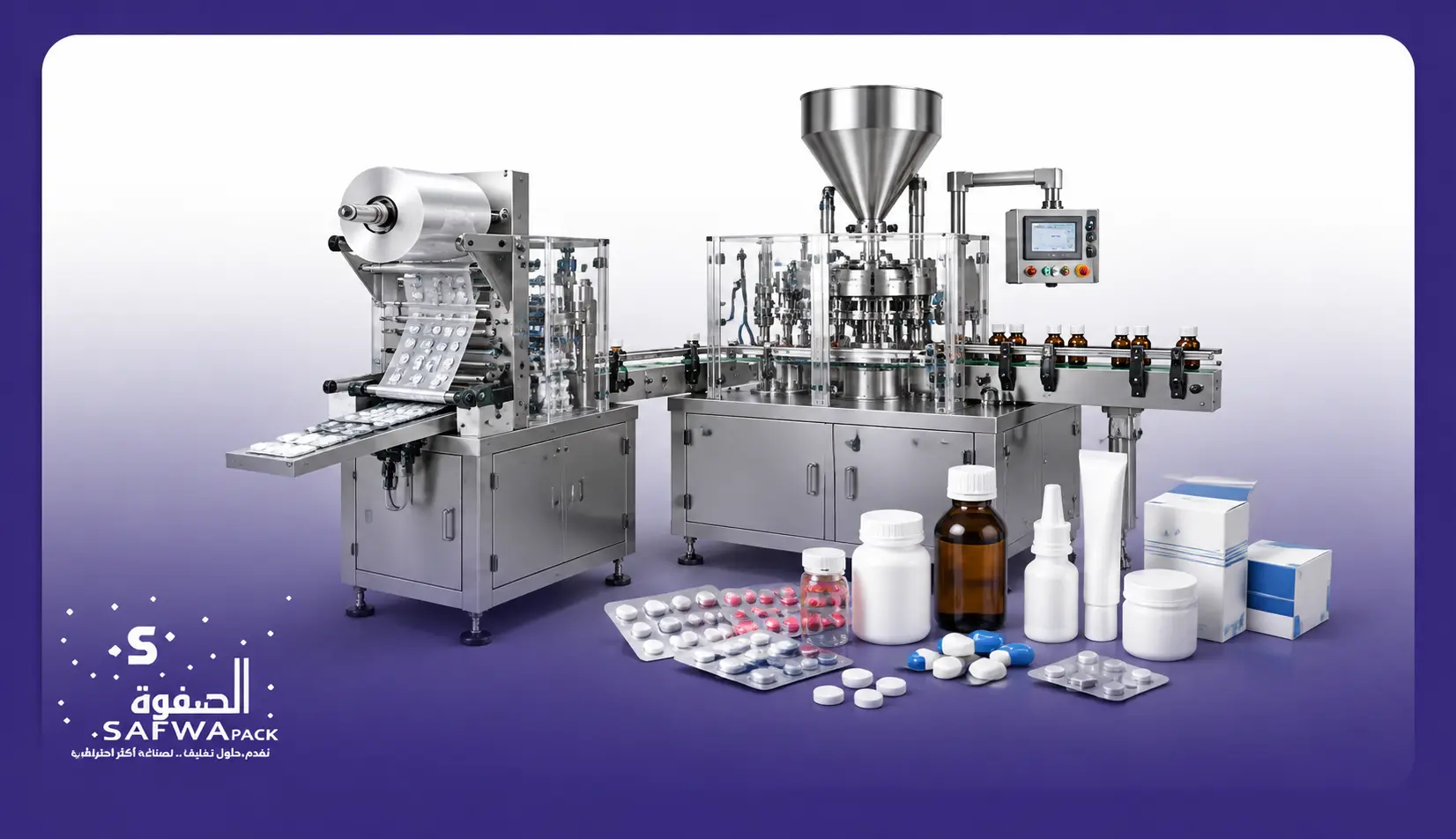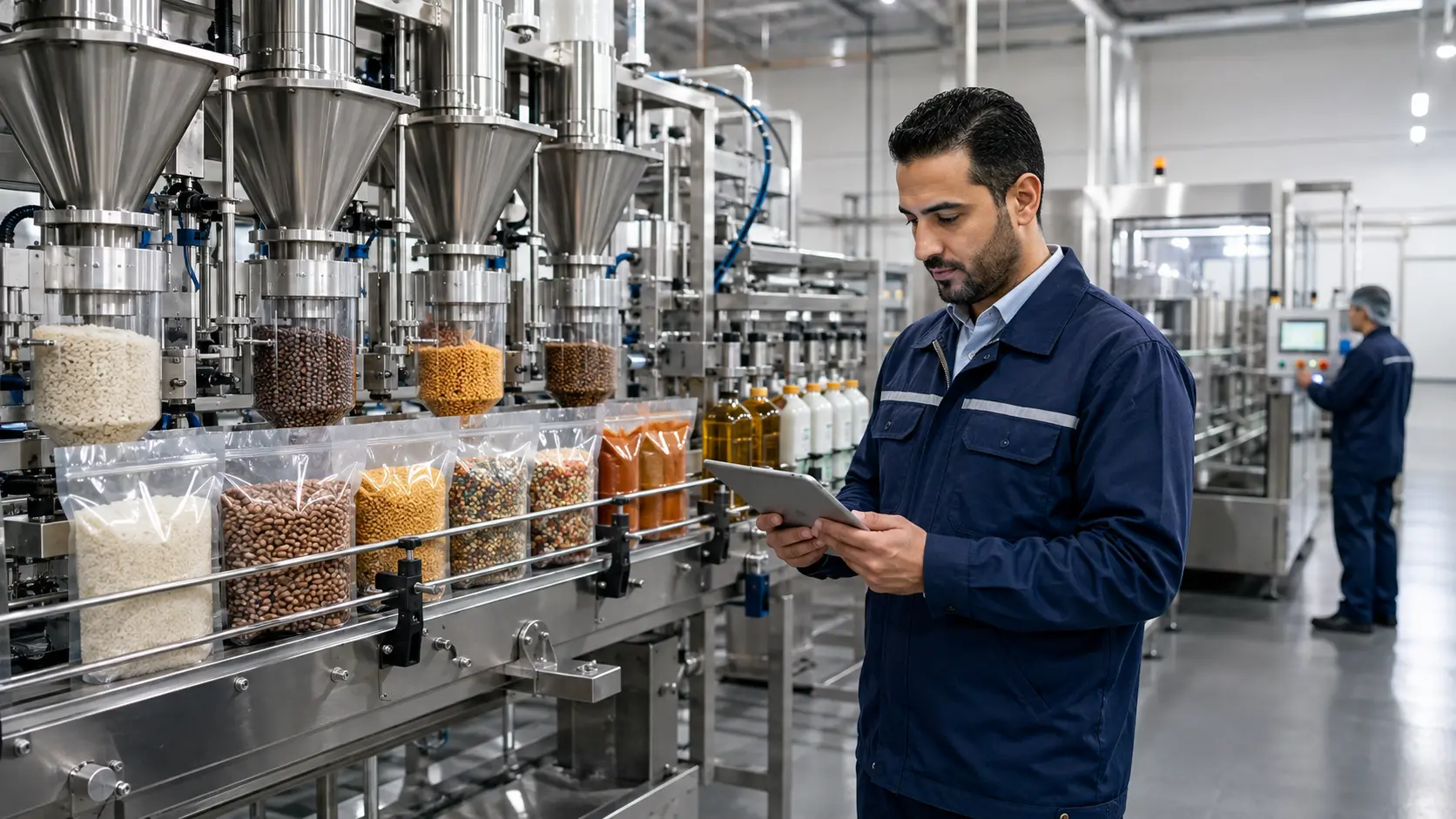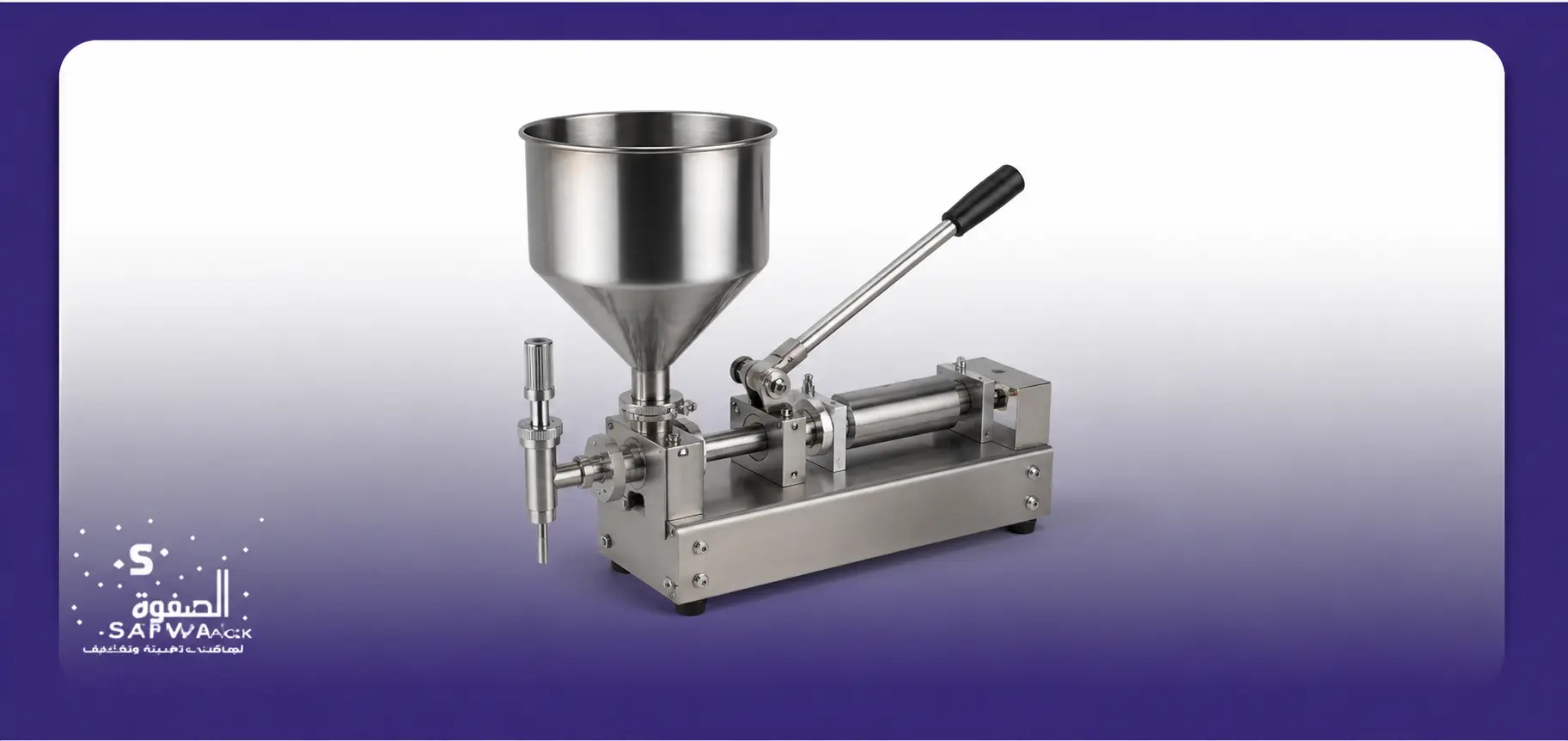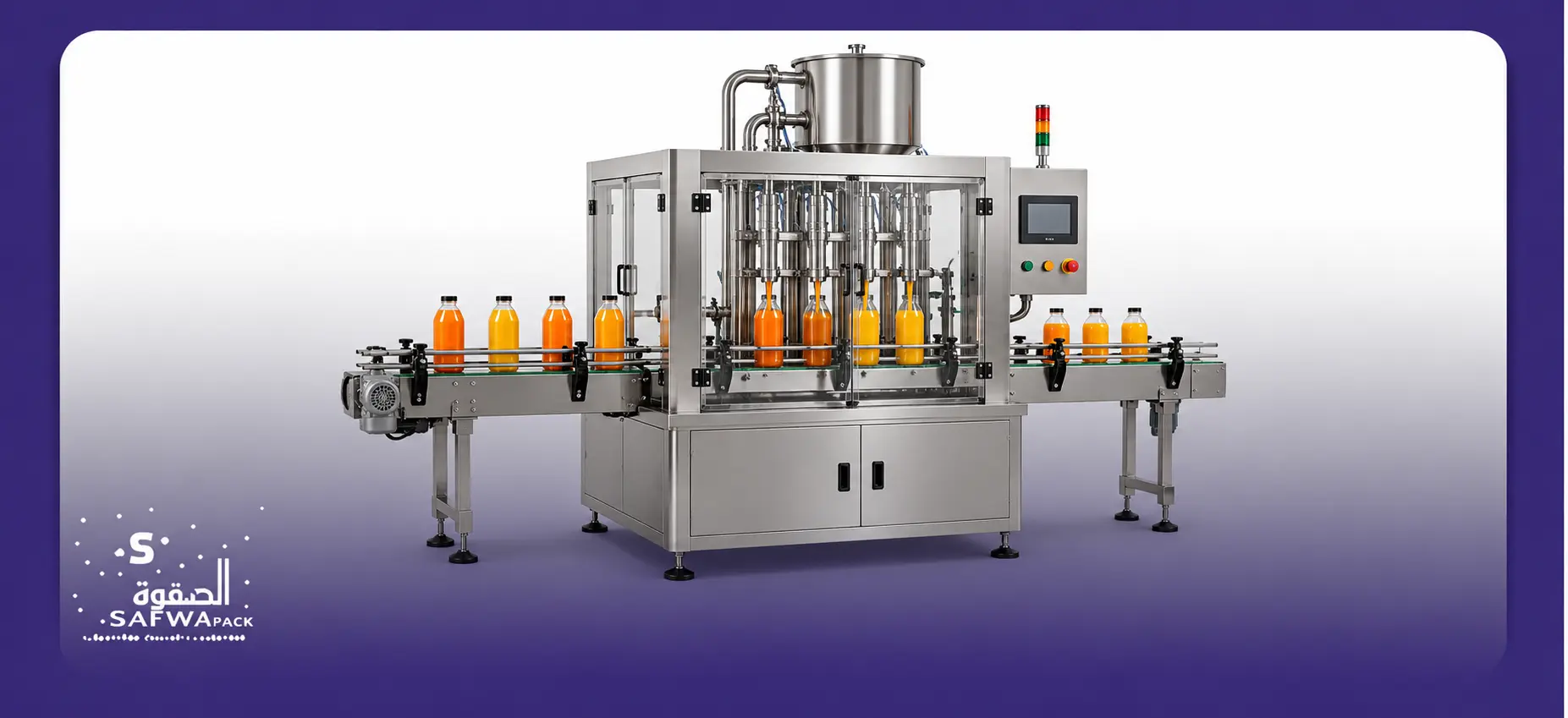
A juice filling machine is one of the most important pieces of equipment in beverage production lines. It helps fill accurate quantities into containers, reduce waste, increase production speed, and maintain a consistent appearance for the final product.
However, choosing a juice filling machine is not based only on price or production capacity. It requires evaluating the type of juice, its viscosity, container size, cap type, and required automation level. El Safwa Pack provides solutions selected according to each project’s needs, from simple filling units to integrated production lines.
Contact El Safwa Pack today and share your product specifications and target production volume to get a machine that fits your project’s needs.
What Is a Juice Filling Machine?
A juice filling machine dispenses a specified amount of juice into bottles or designated containers using a filling system suited to the product’s nature. The filling stage can be integrated with other processes, such as container arranging, cap placement and sealing, labeling, and printing production and expiry dates.
Machine design varies based on several factors, including:
- Juice flowability or viscosity.
- The presence of pulp or fruit pieces in the product.
- Juice temperature during filling.
- Container size and shape.
- Required hourly production volume.
- The level of manual intervention suitable for the project.
- Cleaning and product-changeover requirements.
For this reason, the product should be tested or accurately described before selecting a filling system, especially for thick juices or products containing pulp. To choose a juice filling machine that suits your product and production volume, contact the El Safwa Pack team for a technical consultation and the best solution for your project.
The Importance of Using Juice Filling Machines
Using the right machine is not only about increasing work speed; it also helps the factory or project gain better control over production stages.
Key benefits of juice filling machines include:
Accurate Filling Volumes
Calibrated filling systems help reduce variation in the amount of juice inside containers, supporting product consistency and better raw-material management.
Reduced Waste
Irregular manual filling may cause liquid leakage or overfilling in some containers. The right machine helps reduce waste and improve the use of every production batch.
Increased Production Capacity
As demand grows, filling speed becomes an important factor in a project’s ability to meet customer and distributor needs on time.
Improved Product Appearance
A consistent juice level inside containers, a clean sealing area, and securely fitted caps directly affect the final product appearance when displayed in the market.
Easier Production-Line Expansion
You can choose a system that allows additional units to be added later, such as cap-placement machines, labeling units, or production and expiry-date printers.
Types of Juice Filling Machines by Operating System
No single operating system suits every project. Therefore, juice filling machines are available with different levels of automation.
Manual Juice Filling Machine
This type is suitable for startups or limited production volumes and relies more heavily on the operator to prepare containers and run the filling cycle. It can be an economical option for testing the market before moving to larger-scale production.
You can learn more about this type through the manual liquid filling machine guide and compare its capabilities with your project’s actual needs.
Semi-Automatic Juice Filling Machine
This machine offers a balance between cost and production speed. It handles dosage control and filling, while the operator places or moves containers and seals them depending on the line configuration.
It is suitable for small and medium-sized projects that need to gradually increase productivity without investing in a fully automated line from the beginning.
Automatic Juice Filling Machine
Automatic machines are used in factories with high production rates. They can be connected to a conveyor, container-feeding units, cap-placement systems, and labeling units. These systems help reduce manual intervention, but they require careful planning for operating space, production capacity, and container sizes.
If your project is still at an early stage, the small filling and packaging machine guide can help you understand solutions suitable for limited production and workspaces.
Juice Filling Systems According to Product Characteristics
Juice properties affect the choice of pumping and filling mechanism. Light juice does not necessarily require the same system used for thick or pulp-containing juice.
Gravity Filling
Gravity filling is commonly used for light, free-flowing liquids. The liquid moves into the container by gravity. This system is simple to operate, but its suitability depends on product characteristics and the required filling accuracy.
Piston Filling
Piston filling is suitable for higher-viscosity liquids. The piston draws a defined quantity and pushes it into the container. This system may be suitable for some concentrated juices or products with a thicker consistency.
Pump Filling
Pump filling provides flexibility in handling different types of liquids. However, the pump type and product-contact parts must be selected according to juice viscosity, ingredients, and production rate.
The filling mechanism should not be selected based on its name alone. Practical product testing helps determine the most accurate and efficient solution.
What Containers Can Be Used for Juice Filling?
Machine configurations vary according to the container type, opening shape, and sealing method.
Common container types include:
- Plastic bottles.
- Glass bottles.
- Small-sized containers.
- Jars for some thick beverages.
- Beverage pouches.
- Specially designed containers.
When ordering a machine, it is preferable to provide samples of the container and cap. The neck diameter, container height, stability on the conveyor, and cap-sealing method all affect the final line design.
Components of a Juice Filling Line
A production line may consist of a filling machine only or a sequence of units depending on the project size.
Key production-line components include:
- Container preparation or feeding unit.
- Conveyor belt for moving containers.
- Filling and dosage-control unit.
- Cap feeding and placement unit.
- Cap sealing machine.
- Labeling unit.
- Production and expiry-date printing machine.
- Finished-product collection table.
Identifying the appropriate components from the beginning helps avoid purchasing unnecessary units and makes it easier to plan operating space, staffing, and target production rates.
If you are planning an integrated project, you can review the main requirements for establishing a filling and packaging factory before selecting machinery and production-line layout.
How to Choose the Right Juice Filling Machine
The right choice begins by clearly defining your project and product data, not simply by comparing machine prices.
Before requesting a quotation, determine the following information:
Juice Type
Is the product light and liquid, concentrated, or does it contain fibers or fruit pieces? Each case may require a different pumping system and filling nozzle.
Container Size
Specify the smallest and largest sizes you want to fill, and whether the machine will operate with one size or multiple sizes. Changing sizes may require machine adjustments or replacement parts.
Production Rate
Calculate the number of containers required per day, then choose a production capacity that meets your current needs while allowing a reasonable margin for expected growth.
Automation Level
Choosing an automatic system does not always mean it is the best option for every project. A semi-automatic system may be more suitable when demand is lower or operating space is limited.
Materials of Product-Contact Parts
You should understand the materials used in parts that come into contact with the juice and ensure they are suitable for food applications, cleaning, and maintenance.
Ease of Product Changeover
If you produce more than one flavor, ask about the method for cleaning the filling path and the time required to switch from one product to another to minimize downtime.
After-Sales Services
Before making a purchase decision, confirm installation, commissioning, training, maintenance, and spare-parts availability.
Steps for Operating a Juice Filling Line
Operating procedures may vary according to line design, but they generally include the following stages:
- Prepare the juice according to the formula and production requirements.
- Clean and prepare the tank and filling paths.
- Set the required filling volume.
- Prepare the containers and place them in the feeding area.
- Start filling and monitor the liquid level.
- Place and securely seal the caps.
- Apply labels and print product information.
- Inspect containers and remove any non-conforming units.
- Collect and package the product for storage or distribution.
- Clean machine parts after the production cycle ends.
Operation and cleaning must be carried out according to machine instructions and applicable food-safety requirements in the target market.
How to Clean a Juice Filling Machine
Regular cleaning is essential for maintaining product quality and reducing the risk of flavor mixing or the buildup of production residue.
Basic cleaning steps include:
- Emptying remaining product from the tank and filling paths.
- Cleaning parts that come into contact with the juice according to operating instructions.
- Paying attention to nozzles, hoses, and areas where liquids may collect.
- Using cleaning materials suitable for the machine components.
- Thoroughly rinsing filling paths before starting a new production run.
- Inspecting gaskets and connections regularly.
- Drying parts that require it before restarting operation.
A single cleaning method should not be used for all machines, as the appropriate procedure depends on unit design, materials, and product characteristics.
Juice Filling Machine Price
A fixed price cannot be determined without knowing the project specifications, as machine cost is affected by several factors, including:
- Manual, semi-automatic, or automatic operating system.
- Number of filling nozzles.
- Required production capacity.
- Filling system suitable for the product viscosity.
- Number of container sizes.
- Whether a conveyor or additional units are included.
- Cap placement and sealing system.
- Control and operating level.
- Custom manufacturing requirements.
- Installation and training services.
For an accurate comparison, request a technical quotation that clearly states machine specifications, components, operating capacity, and included services—not just the price.
The cost of liquid-filling equipment differs from that of dry-product equipment. You can review another pricing example through the price of a filling and packaging machine for 1 kg sugar, rice, and legumes to understand how equipment varies according to product type.
Mistakes to Avoid When Buying a Filling Machine
Focusing on price alone may lead to choosing a machine that does not suit your product or operating plan.
Key mistakes to avoid include:
- Buying the machine before testing the juice.
- Not identifying viscosity and ingredient characteristics.
- Ignoring the container shape and cap type.
- Choosing a production capacity below project needs.
- Buying a large line without sufficient operating space.
- Failing to consider cleaning time and flavor changeovers.
- Overlooking electricity or compressed-air requirements.
- Not asking about training, maintenance, and spare parts.
- Comparing different quotations without comparing specifications item by item.
Why Order a Juice Filling Machine from El Safwa Pack?
Choosing the right machine starts with understanding your project’s requirements. El Safwa Pack helps you determine the suitable solution according to the juice type, container shape, production rate, and required operating level.
Before preparing the technical quotation, you can share the following information:
- A sample or detailed description of the product.
- Juice viscosity.
- Photos and sizes of containers.
- Type of cap used.
- Required number of containers to produce.
- Available operating space.
- Stages you want to add to the production line.
This information helps provide a more accurate equipment proposal and avoids adding components that your project does not need.
Frequently Asked Questions
Is there one machine suitable for all types of juice?
No. Juices vary in flowability, viscosity, and the presence of pulp or fibers. Therefore, the filling system and nozzles are selected according to the characteristics of each product.
What is the difference between a semi-automatic and an automatic machine?
A semi-automatic machine requires operator involvement in some stages, while an automatic machine performs more stages consecutively and can be integrated with conveyors, sealing units, and labeling units.
Can more than one container size be filled using the same machine?
Some systems can operate with multiple sizes after adjustment or replacement of specific parts. However, all container dimensions should be specified before manufacturing or purchasing the machine.
Is the machine suitable for juice containing pulp?
That depends on the size of the fibers or pieces, the pumping system, and nozzle diameter. Therefore, the product should be tested before final specifications are approved.
What information is required to receive a quotation?
Required information includes the type of juice, viscosity, container size, cap type, required production capacity, automation level, and any additional stages needed for the project.
Get the Right Solution for Your Project
A successful production line requires a machine compatible with the nature of the product, not simply a fast filling device. Define your project needs and make a clear technical comparison between the available systems before making a purchase decision.
Contact El Safwa Pack today and request a juice filling machine quotation based on your product type, container size, and target production capacity to get a solution that matches your project stage and expansion plans.