This problem may seem simple at the beginning of production, but as demand increases, it becomes a loss of raw materials, longer operating times, and complaints due to inconsistent quantities or container cleanliness.
Here, a manual liquid filling machine can be a practical transition point between traditional open filling and higher-cost production lines. It typically suits startups, workshops, small batch production, and recurring dosages without major automation investment. However, simply choosing a small or cheaper machine is not enough; the measurement system, nozzle, and product-contact components must match the liquid's viscosity, container size, and hygiene requirements.
In this guide, you'll learn how manual machines work, the differences between types, key specifications worth comparing, how to calculate required capacity and waste costs, testing steps before purchase, and operating and cleaning tips. The goal is to make a decision based on your actual product and production plan—not just the machine's appearance or advertised price.
What Are Manual Liquid Filling and Packaging Machines?
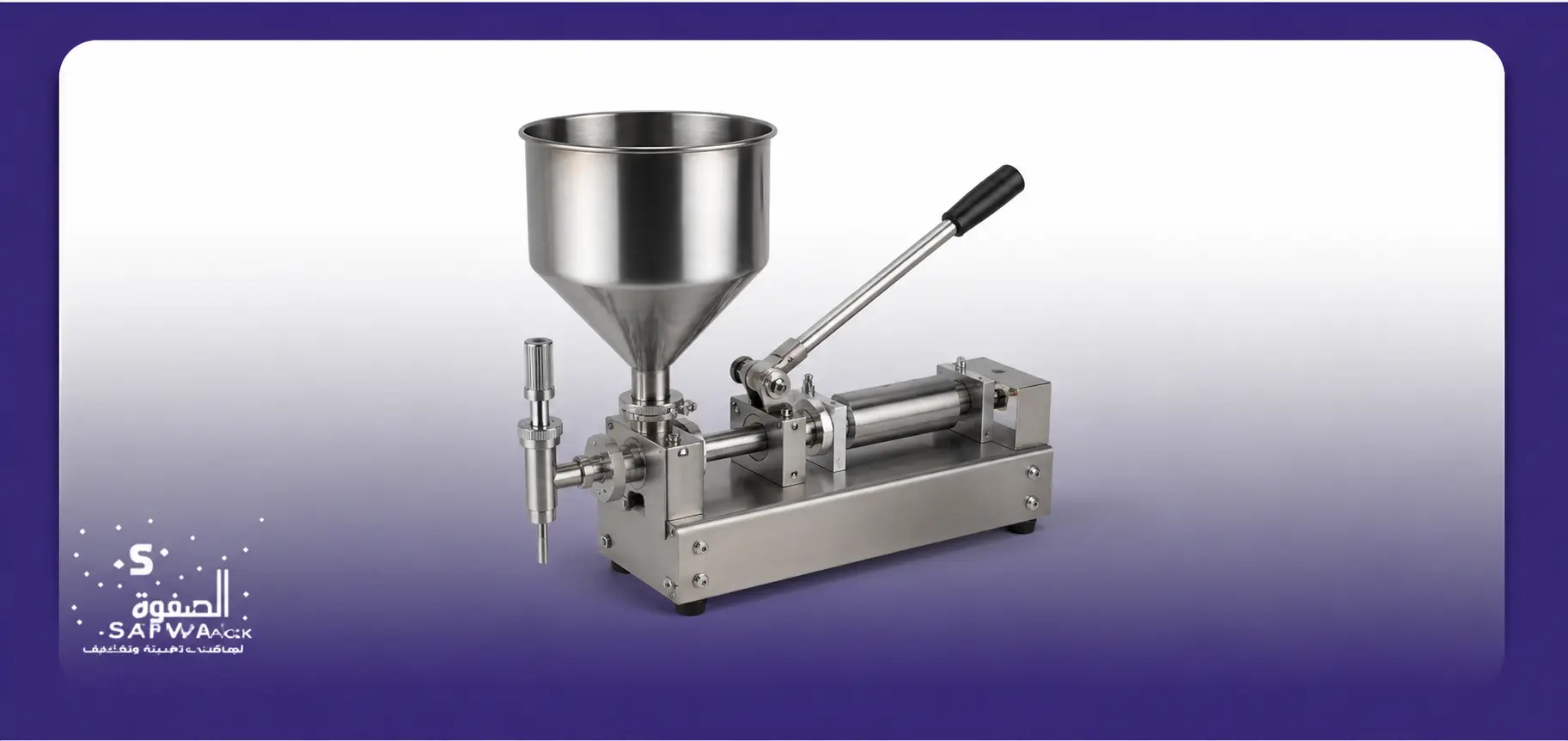
A manual filling machine is equipment that measures or pushes a specific quantity of liquid product into a bottle, jar, or container through direct operator intervention. In mechanical models, a worker pulls a lever that moves a piston inside a cylinder; the product enters from the tank and exits through the nozzle in the next cycle. Some simpler systems rely on an elevated tank and a valve controlling flow by gravity.
A manual liquid filling machine makes dosing more repeatable than free-pouring, but it doesn't necessarily complete the entire packaging process. Filling is placing the required quantity inside the container, while cap installation, sealing, labeling, and date printing may remain separate. Therefore, you must determine whether you need just a filling machine or a small equipment set to complete the product path until it's ready for sale.
This category is used for filling perfumes, oils, serums, detergents, and liquid soaps, and may suit creams, honey, and sauces when using appropriate pistons and nozzles for viscosity. However, the phrase "suitable for all liquids" is not a technical specification; foamy liquids, those containing particles, hot or acidic products, or contamination-sensitive items require different assessment of hoses, gaskets, tank, and filling method.
Key Technical Specifications and Characteristics to Examine
No single specification works for every project; start with the product datasheet, then compare machines by measurable elements. The most important are filling range in milliliters, dose accuracy or tolerance between containers, tank capacity, nozzle diameter, type of drive mechanism, product-contact materials, and ease of disassembly and cleaning.
When evaluating a manual liquid filling machine, review these specifications:
Dose Range: Your container volume must fall within the recommended operating range, not just at its maximum.
Viscosity and Temperature: Test the product under real operating conditions; heat changes can alter flow speed.
Nozzle and Valve: Choose a diameter allowing flow without dripping or foam formation, with drip prevention if needed.
Contact Parts: Request specific identification of metals, gaskets, hoses, and compatibility with your product—don't settle for "stainless."
Hopper or Direct Draw: A hopper suits limited batches, while drawing from an external container may reduce refill frequency.
Disassembly and Cleaning: Every hard-to-reach connection may trap residue and increase product changeover time.
Manufacturer data shows ranges vary greatly between models; some manual models offer 5–50 mL or 10–100 mL ranges without requiring electricity or compressed air, while other piston equipment works manually or automatically with ranges starting at 6.5 mL and reaching 2.6 liters.
These are specific model examples, not universal figures; request a written specification sheet and test using a sample of your product before contracting.
Types of Manual Liquid Filling Machines and Each Type's Use
The term "manual" differs among suppliers; it may mean a fully mechanical machine or an electric machine the operator starts with a button or pedal. The latter is technically closer to semi-automatic. Ask about measurement and movement methods, not just the brand name.
Manual Piston Machine
Relies on a cylinder and piston with adjustable stroke length to determine volume. It's one of the most suitable options for medium to high-viscosity products like creams, gels, honey, and sauces, provided appropriate valve and nozzle are selected.
Its main advantage is volumetric dosing that's repeatable after adjustment, but speed depends on the operator and may require more effort with very thick products. The piston seal and gaskets must be checked, as internal leakage can cause quantity variation between containers.
Gravity Machine with Manual Valve
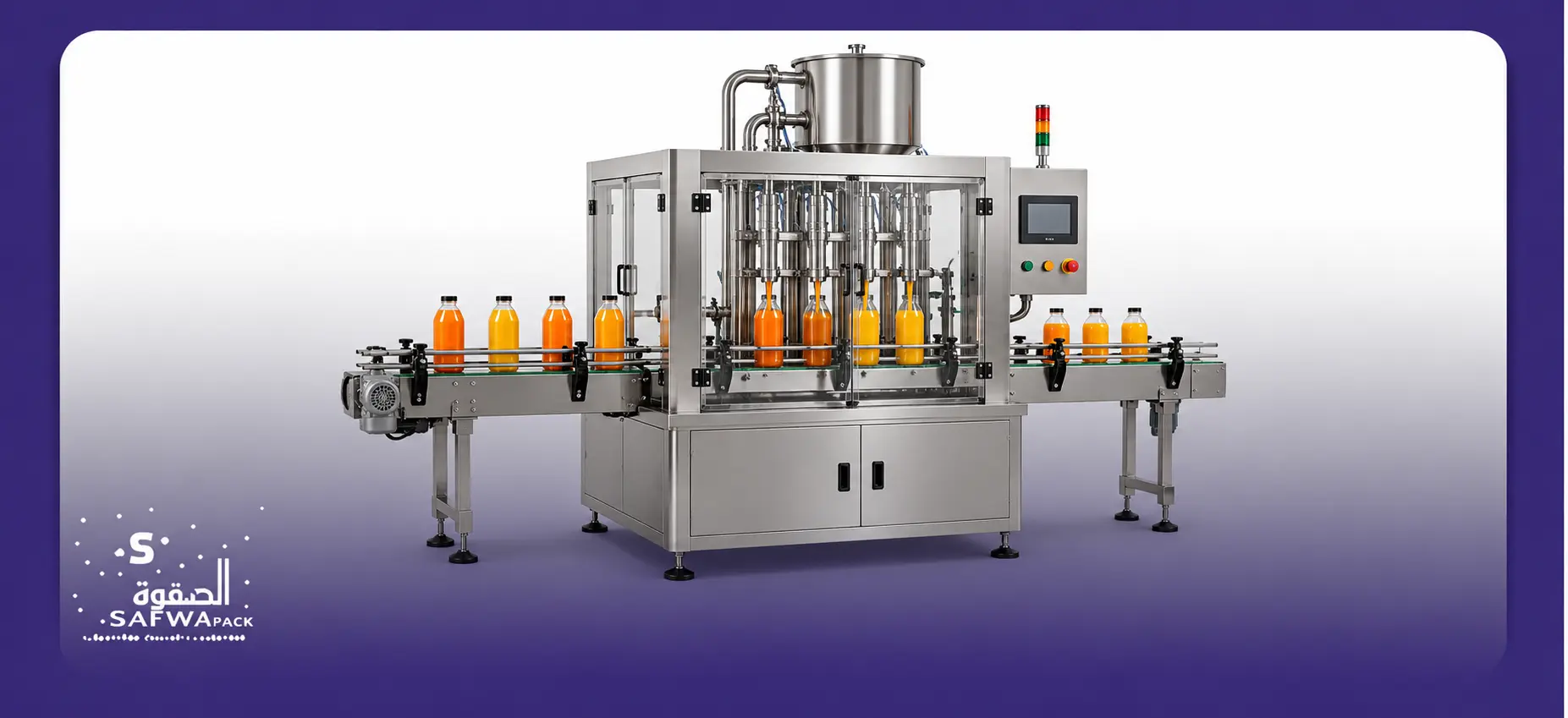
Product flows from a tank above the nozzle when the valve opens. This system suits free-flowing, low-viscosity, non-foaming liquids and is simple and easy to maintain.
However, closing the valve by sight alone can raise variation between containers; a volume limiter or level mark is preferred, with periodic checking of filled quantities.
This system isn't always suitable for viscous liquids or those whose flow changes with temperature, as they may need more consistent pushing force.
Pump Machine with Direct Control
A small pump draws product from an external container, and the operator starts the dose using a button or pedal. It's sometimes marketed as manual because the operator holds the container and activates each cycle, but it typically requires electricity and may be closer to semi-automatic.
It suits some light liquids and small doses, with verification of pump and hose compatibility with the product. You must know whether the dose is determined by time or volume; relying on pump runtime may be affected by liquid viscosity changes or tank level variations.
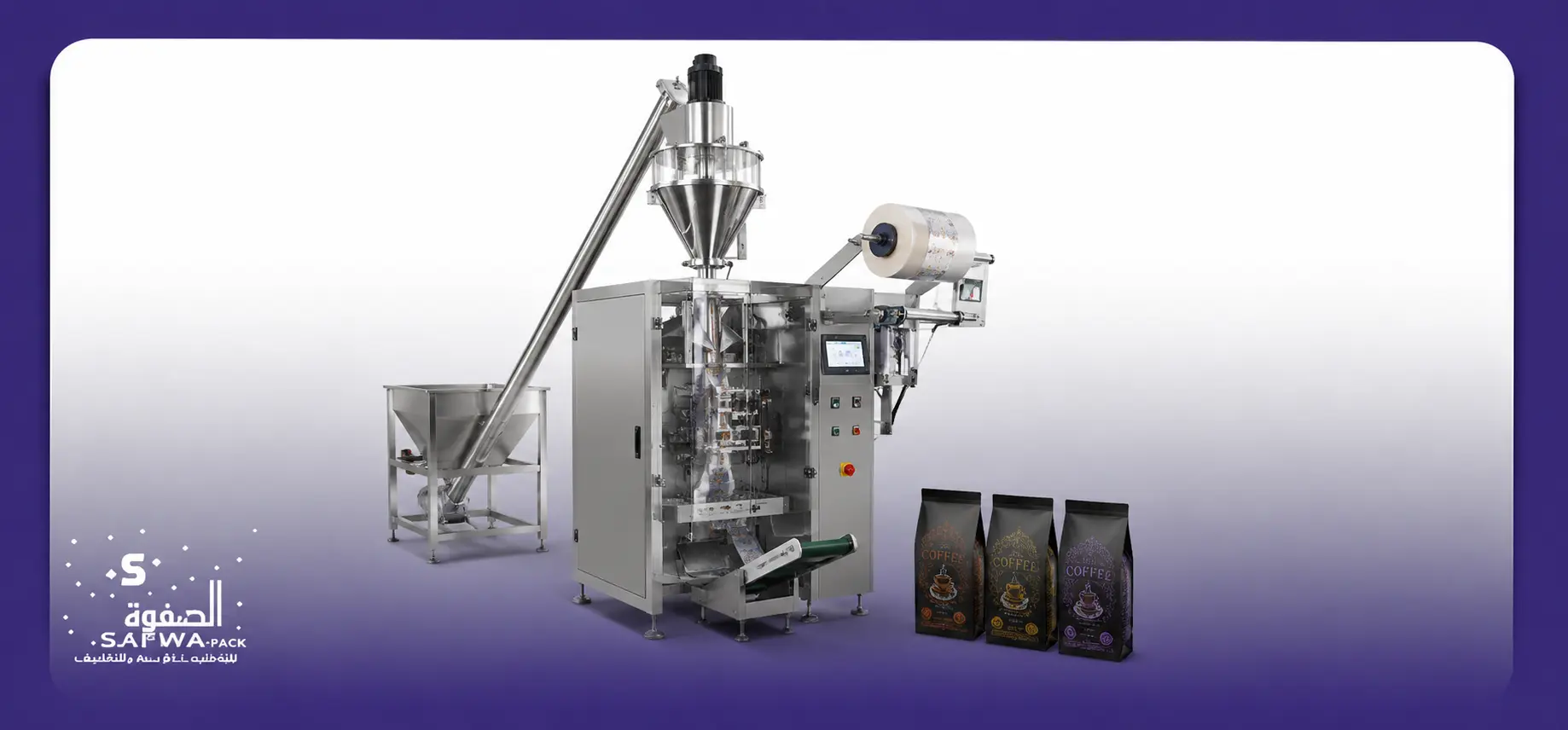
If the product will be filled into film roll bags instead of bottles or jars, the line structure differs, and understanding the difference between vertical and horizontal filling before buying a separate machine that won't match your final container shape helps.
Comparison: Manual, Semi-Automatic, and Full Automatic Machines
| Factor | Manual Mechanical | Semi-Automatic | Full Automatic |
|---|---|---|---|
| Operator Intervention | Operating each dose and moving container | Placing container and starting cycle | Limited after line setup and feeding |
| Production Capacity | Low, suits small batches | Medium, increases with multiple nozzles | High for large quantities |
| Dose Consistency | Good after adjustment, affected by operation | Usually higher with set cycle | High with calibration and continuous control |
| Operating Requirements | Simple, some models need no power | Electricity or compressed air depending on system | Electricity, space, and line integration |
| Initial Investment | Usually lowest | Medium | Highest |
| Product Changeover | Quick if parts disassemble easily | Moderate | Requires procedures and adjustment |
| Best Suited For | Trials, small batches, multiple products | Growing projects, medium production | Large, recurring demand factories |
Criteria for Choosing the Right Machine for Your Project
Start with the product, not the supplier's catalog. Bring a representative liquid sample, the container and cap, and define the minimum and maximum doses you'll produce and daily container quantity needed.
Then calculate actual required speed. If your goal is 1,200 containers in 6 net production hours, you need approximately 3.3 containers per minute, before adding cleaning time, downtime, and material changeover.
To practically choose a manual liquid filling machine, apply these steps:
Classify the liquid: Is it light, foamy, viscous, contains particles, hot, acidic, or contamination-sensitive?
Determine container shape: Check nozzle diameter, container height, stability under the nozzle, and manual handling ease.
Calculate full cycle time: Includes placing container, filling, preventing dripping, removing and moving container—not just liquid outflow time.
Test multiple volumes: The machine might work well at 50 mL but become slow or strained at 500 mL.
Request acceptance trial: Fill 20 consecutive containers, measure quantity, record average, minimum, maximum reading, and any leakage.
Test product changeover: Calculate disassembly, washing, and reassembly time, especially with multiple colors or fragrances.
Review after-sales service: Ask about warranty duration, consumable parts, training, and response time for repairs.
Don't neglect expansion plans. If anticipated demand will double production in a few months, semi-automatic might be more worthwhile despite higher initial cost. If products are numerous but quantities limited, manual machines may offer better flexibility and reduce downtime costs between runs.
Prices and Costs of Manual Liquid Filling Machines
No uniform price is possible; costs vary by dose range, piston or pump system, product-contact material quality, tank capacity, nozzles, country of origin, warranty, and whether the machine is new or used.
Advertised price may not include shipping, training, spare parts, or taxes. Request a detailed quote showing included components and services rather than comparing final numbers alone.
To provide indicative market context, ads available in Egypt when preparing this guide showed a manual liquid and cream machine at approximately 8,000 Egyptian pounds, a semi-automatic at 28,000 pounds, and a four-nozzle light liquid machine at 110,000 pounds.
These are ad prices, not fixed offers, and equipment condition, specifications, and warranty vary; they're unsuitable for comparison without technical inspection.
When requesting manual liquid filling machine pricing, calculate total cost of ownership, including:
- Purchase, setup, and shipping price
- Measurement tools or compressor and electricity if needed
- Operator time per thousand containers
- Cleaning and product changeover costs
- Gaskets, valves, nozzles, and spare parts
- Liquid lost to dripping or overfilling
- Production downtime due to maintenance unavailability
For example, if average unintended overfill is 2 mL per 1,000 daily containers for 25 days, that's 50 liters monthly. At 60 pounds per liter, overfill loss is 3,000 pounds monthly—potentially justifying purchase of a more accurate machine despite higher initial cost.
See pricing guides for packaging machines to understand general pricing factors. If your factory plan includes dry product lines, compare each category separately using coffee machine and herbal product prices, as liquid measurement differs from powders and granules.
For any pricing inquiries, contact us.
Operating Tips and Effective Use That Reduce Waste
Even the best machine won't give consistent results if operator methods vary or startup occurs without calibration. Prepare a written procedure defining parts assembly, dose adjustment, first-run checking, cleaning, and actions for dripping or quantity changes.
7 Golden Operating Tips
Clean before first use and after: Follow supplier instructions; don't use cleaners that damage gaskets or react with the product.
Calibrate using the actual product: Water doesn't represent honey or shampoo in viscosity and flow; final adjustment must use the real sample.
Keep tank level as constant as possible: In gravity systems, liquid height changes may affect flow and fill time.
Check first 10 containers: Measure volume or weight, then repeat at set intervals during shifts.
Monitor nozzle and gaskets: Dripping, bubbles, or increased lever force may indicate clogging, wear, or air entry.
Segregate sensitive products and fragrances: Use separate contact parts when needed to prevent color, odor, or allergen transfer.
Record faults and adjustments: Keep history of gasket changes, dose readings, and cycle time; records reveal performance degradation before production stops.
When operating a manual liquid filling machine, don't press the lever forcefully to compensate for slow product; the cause may be a tight nozzle, different temperature, or unsuitable valve. Stop, inspect the liquid path, then retest the dose. Don't start filling production batches before ensuring parts are clean and first sample quantities are stable.
Benefits of Investing in a High-Quality Machine
Machine value isn't just speed, but ability to deliver stable doses, reduce spilled product, simplify cleaning, and operate without repeated breakdowns. Higher quality shows in piston seal integrity, lever durability, ease of volume adjustment, smooth contact surfaces, and availability of alternative gaskets and valves.
A good manual liquid filling machine can deliver several practical project benefits:
- Better quantity consistency: Improving product appearance and reducing container variations
- Lower waste: Through reduced overfilling, dripping, and product residue in fill paths
- Increased worker productivity: Compared to open filling with funnels or cups
- Improved work area cleanliness: Thanks to relatively closed, easily controlled fill paths
- Small batch flexibility: Especially for new product testing or multiple fragrances and sizes
- Easy training: With clear adjustment and disassembly, proper operating instructions from supplier
- Expansion preparation: Real data on cycle time and demand before moving to semi-automatic
Good investment requires a supplier who tests your product, not just sending price lists. Send liquid type, filling temperature, container sizes, daily units, and container nozzle photos. Request documented test results, adjustment range, and recommended spare parts. If planning a complete filling and packaging facility, study relationships between filling, capping, labeling, printing, and container movement early, preventing manual equipment from becoming a bottleneck as demand grows.
For more about our offerings:
- Tablet press machines for sale
- Medicine packaging and filling
Conclusion
Choosing the right filling machine starts by determining product viscosity, container size, and daily capacity, then comparing dose range, nozzle, materials, cleaning ease, and after-sales service. Price shouldn't be the sole criterion; waste, labor, downtime, and spare part costs may exceed purchase price difference quickly.
Before contracting, test real liquid samples in actual containers, measure 20 consecutive doses, and request an offer showing specifications, warranty, spare parts, and training. These steps let you know whether manual machines are economically right now, or if production volume requires semi-automatic systems.
Contact Elite Packaging and Filling Machines Company, send liquid type, container sizes, and daily production requirements; the team proposes the right solution and prepares a technical and price offer based on your actual project needs.
Frequently Asked Questions
Do manual machines suit light and viscous liquids?
Yes, but not necessarily the same model. Gravity systems or pumps suit some light liquids, while pistons typically better suit viscous ones. Test your actual product for flow, accuracy, and no dripping.
What's the difference between manual and semi-automatic machines?
In mechanical manual machines, the operator generates fill motion via lever or valve. Semi-automatic machines have the operator place the container and start the cycle, while the machine measures and pumps the dose using electricity or compressed air.
How do I confirm fill accuracy before purchase?
Request 20 consecutive containers of your product, measure each, and record average, minimum, and maximum readings. Repeat testing after tank refilling and after disassembling and reassembling to confirm easy setup recovery.