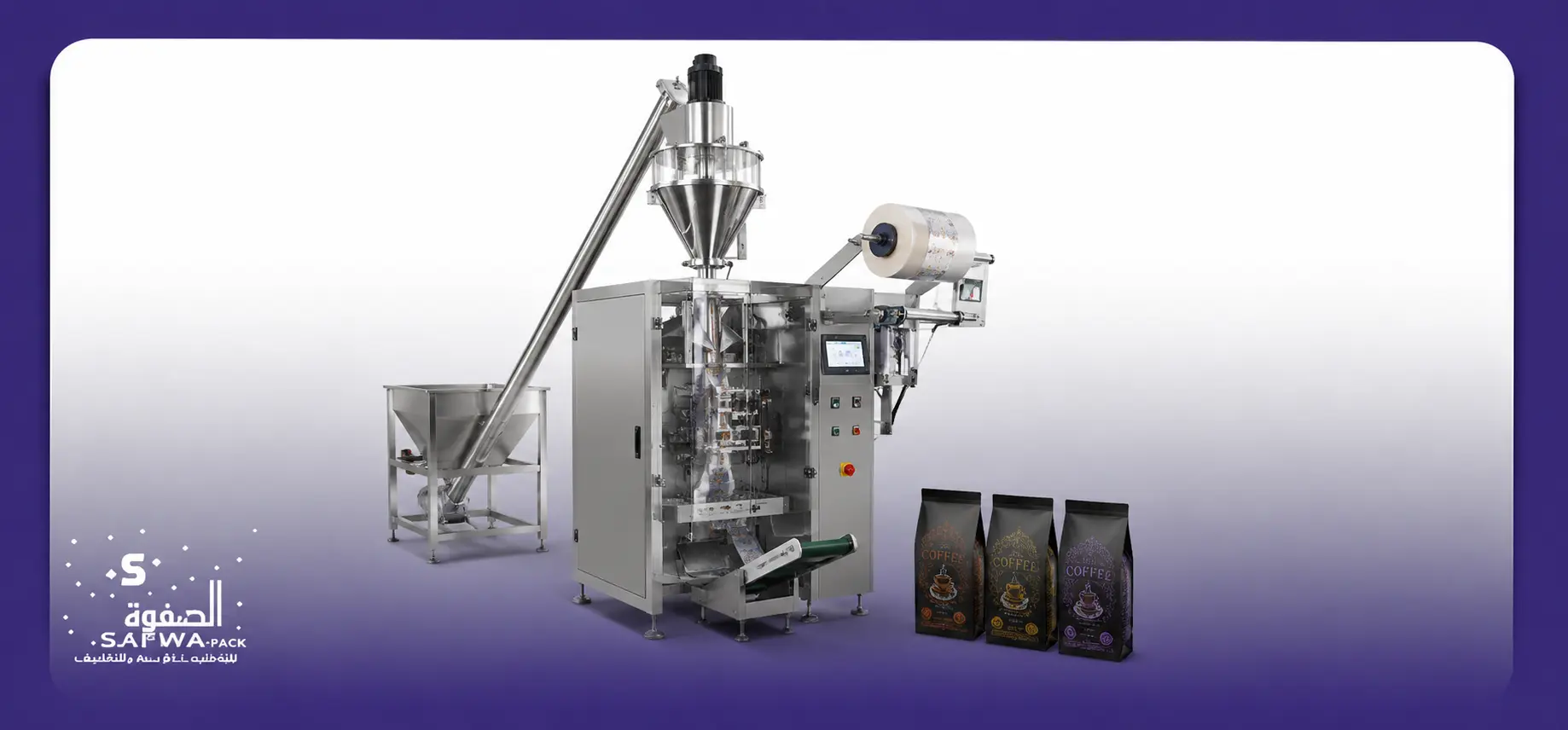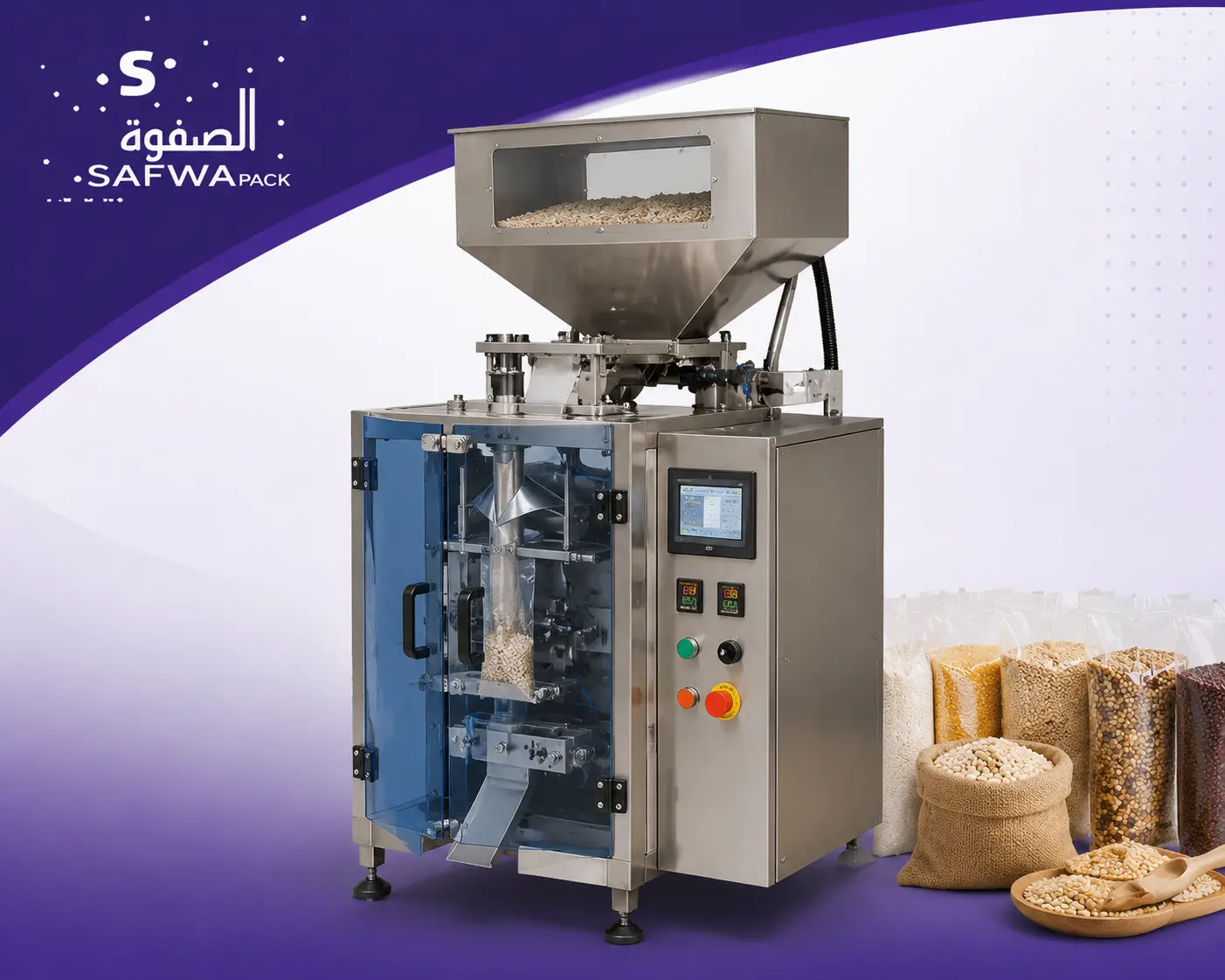
The price of a grain filling machine in Egypt in 2026 varies depending on the machine type, operating method, and required production capacity. Models are available for small projects as well as factories and large production lines. Choosing the right filling machine helps increase work speed, reduce waste, and improve the quality of the final product. In this guide, we will explore the types and prices of grain filling machines, as well as the key factors that help you choose the right machine for your project.
How Much Does a Grain Filling Machine Cost in Egypt in 2026?
The price of a grain filling machine in Egypt is determined by several factors, most importantly the machine type, automation level, production speed, and filling system used.
Prices start at a lower cost for manual machines suitable for small projects, while automatic machines used in factories are more expensive due to their high production capacity and advanced equipment.
Estimated price ranges are as follows:
| Filling Machine Type | Approximate Price | Suitable For |
|---|---|---|
| Manual grain filling machine | EGP 5,000–20,000 | Small projects |
| Semi-automatic grain filling machine | EGP 30,000–150,000 | Small and medium factories |
| Automatic grain filling machine | Starting from EGP 200,000 and above | Large production lines |
Final prices vary according to the required specifications. Therefore, it is preferable to compare different filling and packaging machines before making a purchase decision to reach the best balance between cost and productivity.
Types of Grain Filling Machines and Their Prices
Grain filling machines differ according to their operating method and measuring system. They include manual, semi-automatic, and automatic machines, as well as machines that operate by weight or volume.
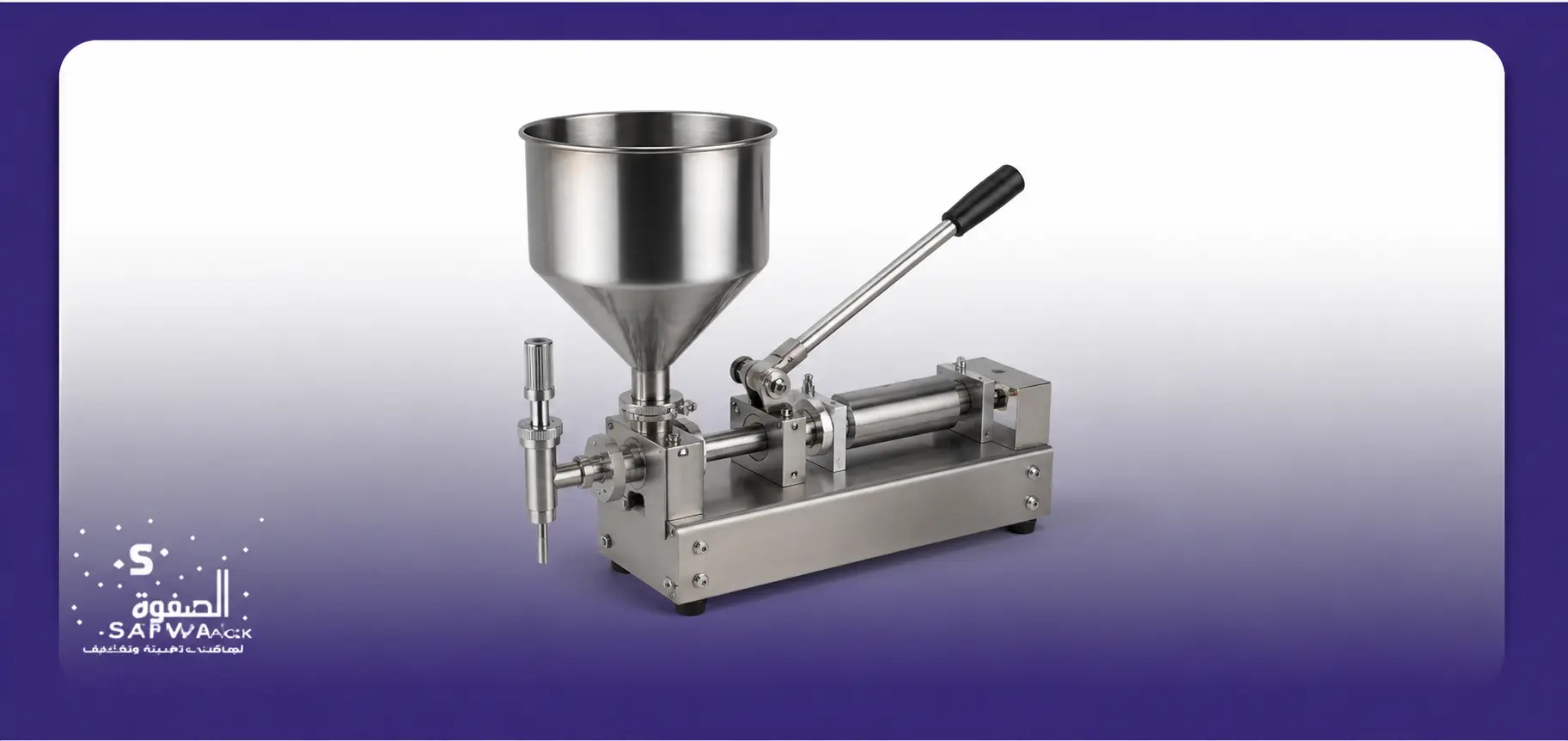
Manual Grain Filling Machine: Price and Features
A manual grain filling machine is one of the simplest solutions used for packing food products. It is suitable for projects with limited production that do not require high operating speeds.
These machines rely on the operator during filling and quantity control inside the package, making them affordable and easy to operate.
Key advantages include:
-
Affordable for startups.
-
Does not require a large space.
-
Easy to operate and maintain.
-
Suitable for packing rice, legumes, and various grains.
However, its disadvantages include:
-
Lower production speed than automatic machines.
-
Requires more manual effort.
-
Weight accuracy depends on the operating method.
Semi-Automatic Grain Filling Machine: Price and Features
A semi-automatic grain filling machine is a suitable choice for projects that need to increase production while maintaining a reasonable investment cost.
These machines offer greater filling-weight accuracy and higher speed than manual machines, which is why they are used in many food-product packaging factories.
Their main advantages include:
-
Increased production speed.
-
Improved filling accuracy.
-
Reduced time and manual effort.
-
The ability to fill different package sizes.
These machines suit project owners working in food filling and packaging who need to develop production gradually.
Automatic Grain Filling Machine: Price and Features
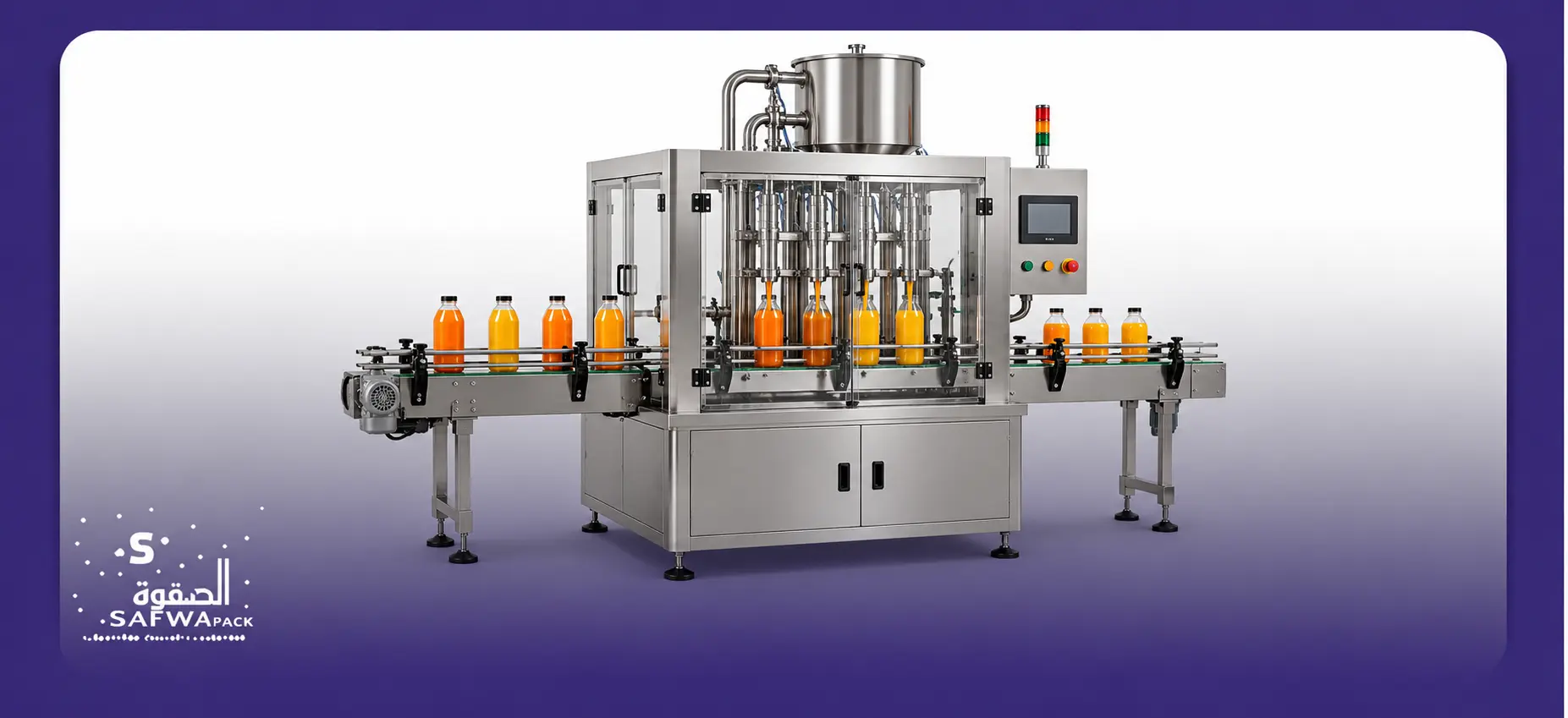
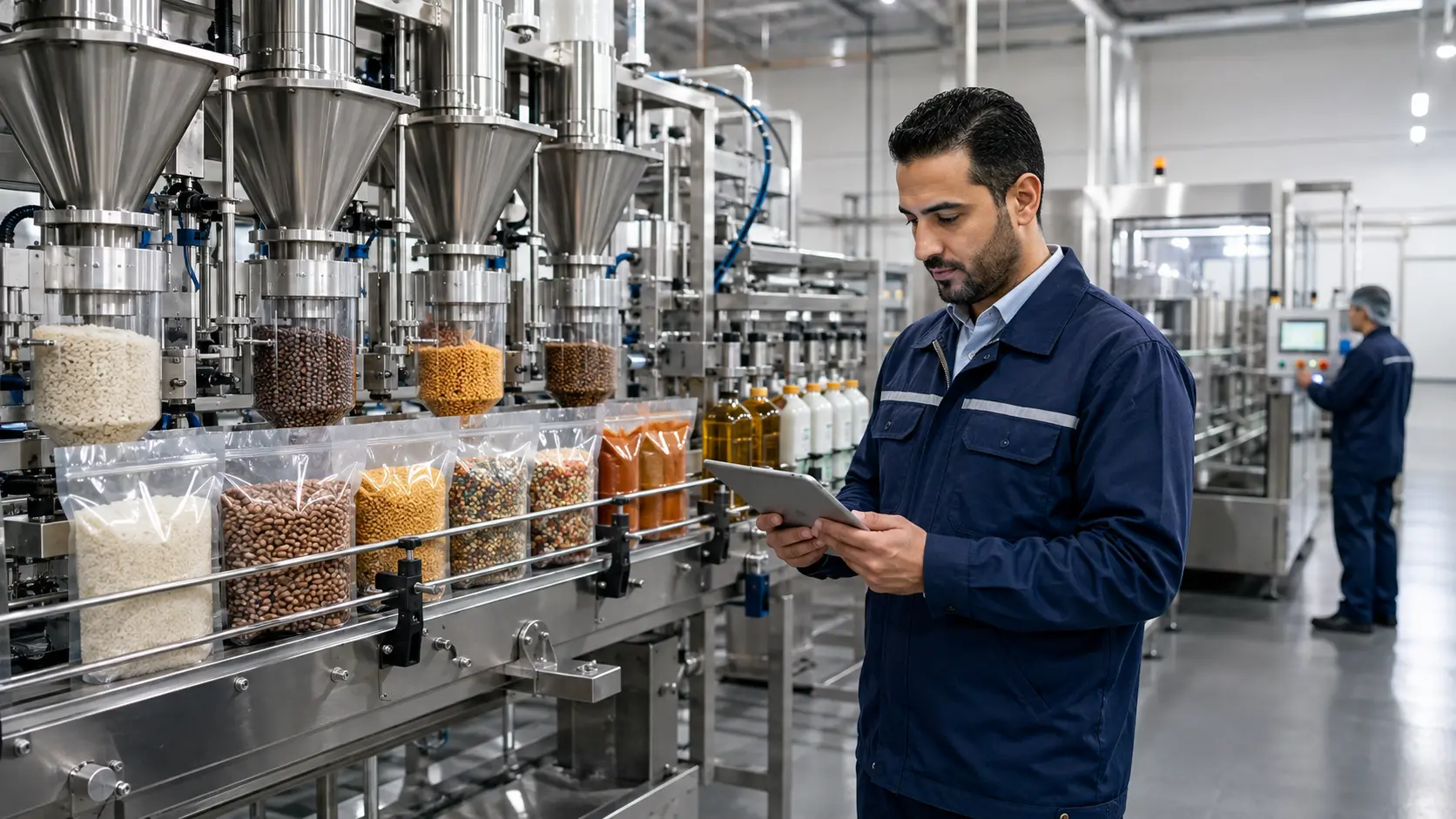
An automatic grain filling machine is the best choice for factories that need to produce large quantities in a short time. It operates automatically and provides high filling accuracy.
These machines are used in production lines that rely on speed and quality. They can be integrated with other equipment, such as heat shrink packaging machines, to create a complete packaging line.
Its main advantages include:
-
High productivity.
-
Reduced reliance on labor.
-
High accuracy in determining package weight.
-
Faster operation.
-
Suitable for large-scale commercial production.
It can be used to pack many products, such as:
-
Rice.
-
Sugar.
-
Lentils.
-
Fava beans.
-
Legumes.
Weighing Grain Filling Machine
A weighing grain filling machine uses an electronic system to accurately measure the product quantity before placing it in the package. It is therefore suitable for products sold in specified weights.
These machines help reduce waste and achieve more consistent package weights, making them a suitable option for factories that focus on final-product quality.
Volumetric Grain Filling Machine
A volumetric grain filling machine works by dispensing a specified volume of product into each package rather than measuring its weight.
It is commonly used with dry products that do not require highly accurate weight measurement, offering good filling speed and reasonable operating costs.
Comparison Table: Types of Grain Filling Machines
Before choosing a suitable grain filling machine, it is important to compare the available types in terms of price, productivity, and operating method. The right choice depends mainly on the project size and the required daily quantity.
| Machine Type | Approximate Cost | Productivity | Key Features |
|---|---|---|---|
| Manual filling machine | Low | Limited production | Suitable for small projects and easy to operate |
| Semi-automatic filling machine | Medium | Medium production | Higher accuracy and faster operation |
| Automatic filling machine | High | High production | Suitable for factories and production lines |
| Weighing filling machine | Varies by system | Very accurate | Suitable for packages with specified weights |
| Volumetric filling machine | Medium | Good speed | Suitable for some dry products |
Factors That Affect the Price of a Grain Filling Machine
The price of a grain filling machine in Egypt does not depend only on the machine type. Several factors determine the final cost, so project requirements should be studied before purchase.
Automation and Control Level
The operating level is one of the most important factors affecting machine price. Manual machines are less expensive, while automatic machines cost more because they rely on advanced control and programming systems.
The greater the automation level, the higher the production speed and the lower the need for manual intervention, making these machines suitable for factories that need large-volume production.
Production Capacity and Filling Speed
Machines vary according to the quantity of products they can fill per hour. Small projects do not need the same speed as large production lines.
Before purchasing a filling machine, determine:
-
The number of packages required per day.
-
Expected production volume.
-
The possibility of increasing production in the future.
Choosing a machine with capacity above the project’s needs may increase cost without benefit, while choosing one with insufficient capacity may slow production and increase operating costs.
Type of Grain to Be Filled
The product type directly affects the machine choice and price. There is a difference between filling:
-
Rice.
-
Sugar.
-
Lentils.
-
Fava beans.
-
Legumes.
-
Other grains.
Some products require special filling systems because of differences in size, weight, or how the product moves through the machine.
Weighing System and Measurement Accuracy
Filling machine prices vary according to the measuring system used. Machines that rely on electronic scales offer higher accuracy than traditional systems.
Weight accuracy is especially important for products sold in fixed weights, as it helps reduce waste and maintain product quality.
Machine Manufacturing Materials
Manufacturing materials play a major role in determining machine price and service life. High-quality machines often use corrosion-resistant, easy-to-clean materials, such as stainless steel used in food industries.
Brand and Country of Origin
Filling machine prices vary according to the manufacturer and country of production. Some companies offer economical options, while others provide high-quality machines equipped with advanced technologies and technical-support services.
Therefore, price alone should not be the deciding factor. Quality, warranty, and spare-parts availability should also be compared.
The Best Grain Filling Machine for Small and Medium Projects
Choosing the best grain filling machine depends on the nature of the project and required production volume. There is no single machine suitable for every use.
A Machine Suitable for Startups
If the project is in its early stages or depends on limited production quantities, a manual or semi-automatic filling machine is a suitable option because of its lower cost and ease of operation.
These machines help start a project with lower investment while allowing the production line to be developed in the future.
A Machine Suitable for Small Factories
Semi-automatic machines are suitable for small factories that need to increase production speed and improve filling accuracy without bearing the cost of a complete production line.
They provide a good balance between price and productivity.
A Machine Suitable for Large-Scale Commercial Production
For factories that produce large quantities daily, automatic machines are the best option because they offer high speed, better accuracy, and the ability to integrate with different filling and packaging lines.
How to Choose the Right Grain Filling Machine for Your Project
Choosing the right filling machine requires studying several factors to ensure the best return on investment.
Determine Daily Production Volume
Start by identifying the quantity of products you need to fill every day. This helps you choose the appropriate machine production capacity.
Choose the Right Filling Method
Determine whether you need filling by weight or volume, as each system has uses and advantages that vary according to the product type.
Calculate Operating and Maintenance Costs
Do not calculate only the purchase price of the machine. Operating costs should also be considered, including:
-
Electricity consumption.
-
Periodic maintenance.
-
Spare parts.
-
Labor costs.
Compare Price with Expected Return
The right machine is not always the cheapest one. It is the machine that provides the best balance between cost, productivity, and service life. Therefore, the expected return should be calculated before making a purchase decision.
Specifications to Check Before Buying a Grain Filling Machine
Before purchasing a filling machine, make sure it has specifications that suit your operating needs, including:
-
Production speed.
-
Weight accuracy.
-
Package sizes supported by the machine.
-
Ease of cleaning and operation.
-
Spare-parts availability.
-
Installation and maintenance services.
-
Quality of manufacturing materials.
Choosing a machine with suitable specifications helps reduce breakdowns and maintain stable production over a long period.
Additional Costs After Buying a Grain Filling Machine
When calculating the purchase cost of a grain filling machine, do not rely only on the machine price. There are operating costs that affect the project’s overall budget, most importantly maintenance, training, and spare parts.
Spare Parts and Periodic Maintenance
A filling machine requires regular maintenance to maintain operating efficiency and reduce the possibility of breakdowns. Maintenance costs vary according to the machine type and usage rate.
Maintenance includes:
-
Inspecting moving parts.
-
Replacing worn parts.
-
Cleaning filling and weighing systems.
-
Checking the efficiency of control systems.
Choosing a machine from a company that provides original spare parts and good maintenance service helps increase the machine’s service life and reduce production downtime.
Operating Costs and Electricity Consumption
Operating costs vary depending on the filling machine type and production capacity. Automatic machines consume more energy than manual machines, but they offer higher production speed and reduce labor costs in the long term.
Therefore, you should calculate:
-
Electricity consumption.
-
Daily operating hours.
-
Number of workers required for operation.
Training and Installation Costs
Some filling machines require training for workers on how to operate them and adjust their settings, especially automatic machines with control systems and operating programs.
You should also ensure that installation and machine-testing services are available before starting work to guarantee proper operation.
Technical Support and Warranty
Technical support is an important factor when purchasing a filling machine. Having a specialized team helps solve issues quickly and reduce production downtime.
It is therefore preferable to choose a supplier that provides:
-
Machine warranty.
-
After-sales service.
-
Periodic maintenance.
-
Spare-parts availability.
Prices of Grain Filling Machine Models in Egypt 2026
The prices of grain filling machine models vary according to specifications and capabilities. The following prices are estimated and may differ depending on the manufacturer, production capacity, and filling system used.
| Machine Type | Approximate Price | Main Specifications | Suitable For |
|---|---|---|---|
| Manual grain filling machine | EGP 5,000–20,000 | Manual operation, limited production | Small projects |
| Semi-automatic filling machine | EGP 30,000–150,000 | Weighing system and improved control | Small factories |
| Automatic filling machine | Starting from EGP 200,000 | High speed and automatic operation | Production lines |
| Electronic weighing filling machine | Based on specifications | High measurement accuracy | Commercial packages |
These prices are only approximate indicators. The cost may increase when additional equipment is added, such as printing systems, packaging equipment, or connection to an integrated production line.
Is a Grain Filling Machine a Profitable Project?
A grain filling project has good growth potential because demand for essential food products—such as rice, legumes, sugar, and various grains—continues.
A filling machine helps improve project profitability by:
-
Increasing production speed compared with manual filling.
-
Reducing product waste.
-
Improving the appearance of the final package.
-
Producing larger quantities in less time.
-
Providing a market-ready product.
The machine’s payback period varies according to production volume, selling price, and operating costs. Therefore, a feasibility study should be prepared before purchasing to determine the expected return.
Conclusion
Choosing the right grain filling machine depends on the size of your project, the products you fill, and the required production capacity. Price should not be the only factor when buying. Quality, specifications, and technical-support services must also be compared to achieve the best investment.
If you are looking for a filling machine that suits your project’s needs, contact us for a consultation and choose the right solution to help you increase production and achieve the best results with lower operating costs.