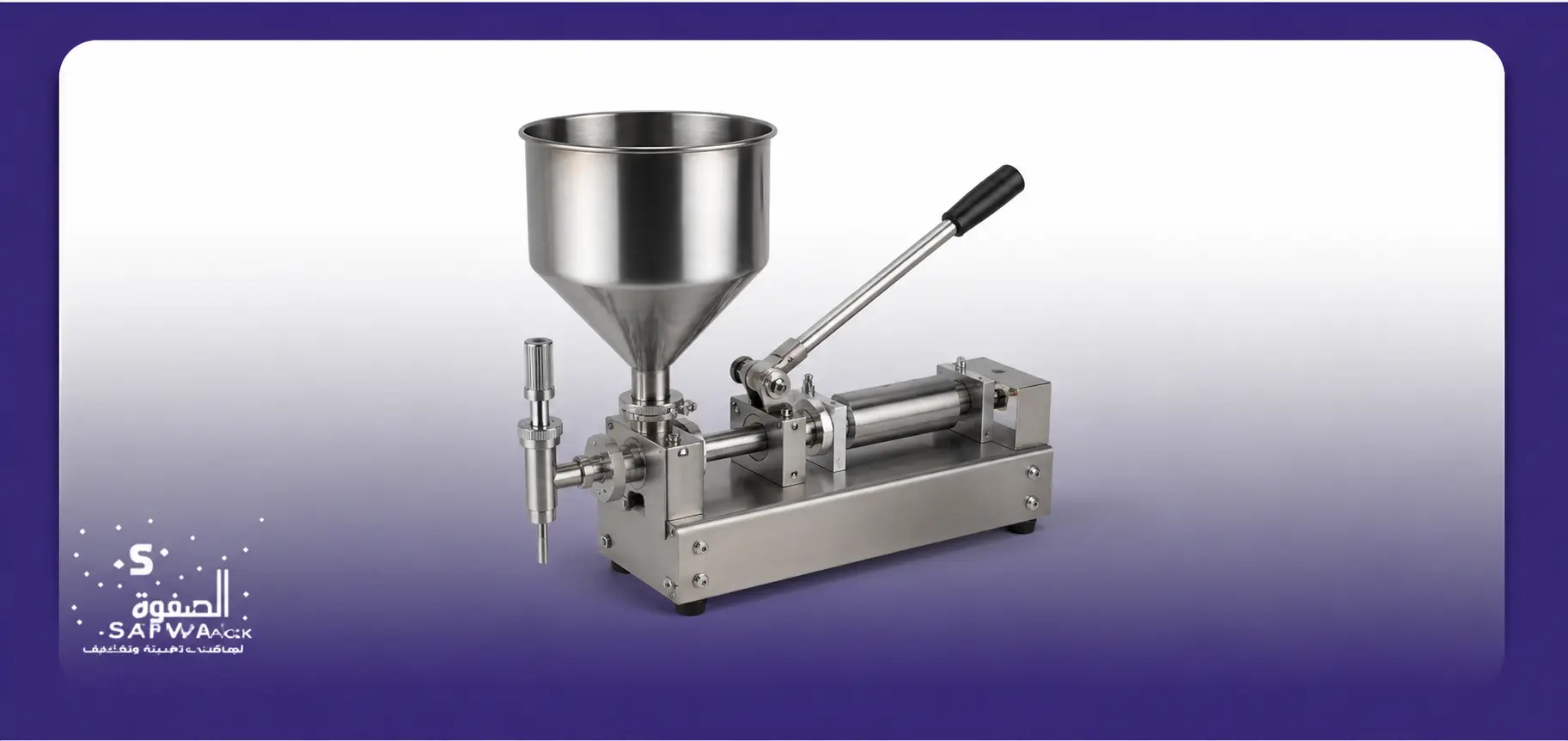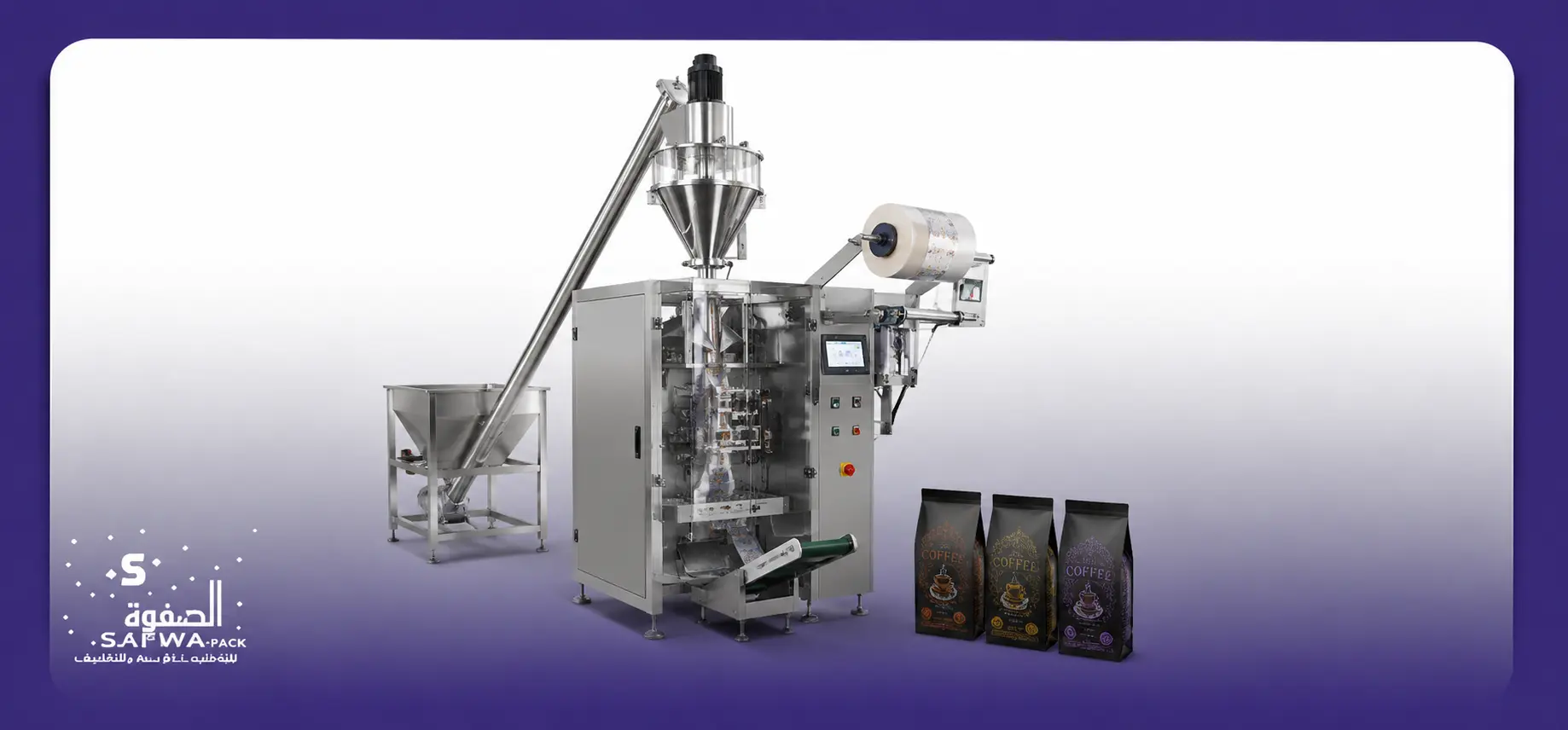
The coffee filling and packaging machine price in Egypt varies according to the product type, package weight, production speed, filling system, bag format, automation level, and additional equipment required. A machine designed for ground coffee may differ from one used for whole coffee beans or instant coffee, while a complete production line costs more than a standalone filling machine.
Whether you are starting a new coffee brand or upgrading an existing factory, this guide explains what determines the cost, which specifications are worth comparing, and what information you should prepare before requesting a quotation from El Safwa for Packaging Machines.
How Much Does a Coffee Filling and Packaging Machine Cost in Egypt?
There is no single figure suitable for every project because the coffee filling and packaging machine price is calculated after evaluating the product, package, and required production capacity. Available solutions usually start with semi-automatic machines for filling pre-made bags or containers. The cost then rises with automatic machines that form, fill, seal, and cut bags, and increases further when conveyors, coding systems, vacuum units, feeding systems, or inspection equipment are added.
To compare quotations accurately, each offer should specify the filling range, number of packages produced per minute or hour, dosing accuracy, material of the product-contact parts, sealing system, electricity and compressed-air requirements, installation, operator training, and warranty. The lowest-priced machine is not economical if it is too slow, causes product waste, or cannot handle the selected packaging material.
What Determines the Coffee Filling and Packaging Machine Price?
The coffee filling and packaging machine price is affected by several connected factors, including:
-
Coffee type: Fine ground coffee, whole beans, instant coffee, or blends containing different ingredients.
-
Filling range: The minimum and maximum package weights required for retail or wholesale products.
-
Production capacity: The number of bags or containers required per minute, hour, or work shift.
-
Automation level: Manual, semi-automatic, or fully automatic operation.
-
Dosing system: Auger filling for powders or weight-based filling for beans and products with varying densities.
-
Package format: Pre-made bags, roll film formed inside the machine, jars, containers, or vacuum bags.
-
Sealing method: Back, three-side, or four-side sealing, with cutting and an easy-open notch when required.
-
Manufacturing materials: The quality of the machine body and the suitability of product-contact parts for food applications.
-
Additional equipment: Date coder, conveyor, product feeder, metal detector, vacuum system, or labeling unit.
-
Included services: Installation, commissioning, training, maintenance, and spare-parts availability.
Before making a final decision, you can review the broader guide to filling and packaging machine prices to understand the general factors that affect the cost of each machine category.
Types of Coffee Filling Machines and Their Effect on Cost
The right machine is determined not only by the size of the project but also by the physical form of the coffee, the package, and how the final product will be presented to customers.
| Product or package type | Commonly suitable filling system | Relative investment level | Best suited for |
|---|---|---|---|
| Ground coffee | Auger powder filling | Medium | Bags and containers requiring accurate dosing |
| Whole coffee beans | Weight-based filling | Medium | Protecting bean quality and controlling package weight |
| Small coffee sachets | Automatic form-fill-seal machine | Medium to high | Hotels, restaurants, samples, and single servings |
| Pre-made valve bags | Filling and sealing system compatible with the bag | Depends on automation | Retail coffee brands |
| Vacuum coffee bags | Filling, vacuum, and secure sealing system | Relatively high | Products requiring a specialized preservation format |
| Jars or rigid containers | Filler followed by capping and labeling | Medium to high | Instant coffee and coffee blends |
This comparison is a general guide. The final selection should be based on a trial using the actual coffee because grind size, density, flow behavior, and blend composition can affect dosing accuracy and operating speed.
Ground Coffee Filling Machine
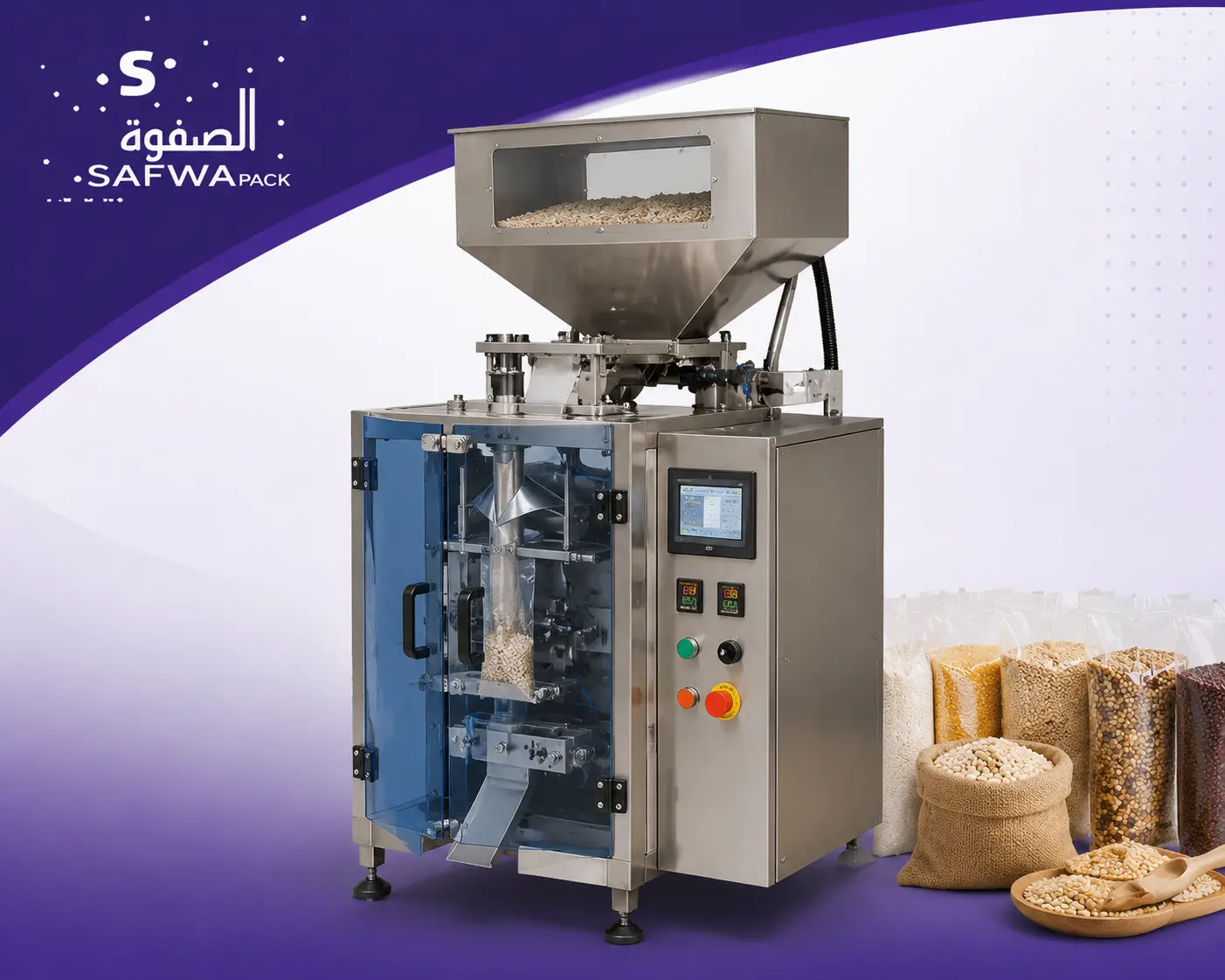
Ground coffee usually requires a system that handles powder accurately while limiting dust and product buildup along the filling path. Auger filling is commonly used for powders because the dose can be adjusted according to the package weight and product density. The total machine cost will depend on dosing accuracy, production speed, leakage control, and how easily the product-contact parts can be removed and cleaned.
Some requirements for ground coffee are similar to those of other food powders. Reviewing a spice filling and packaging machine can therefore help you understand when an auger system is more suitable than a weight-based filling system.
Whole Coffee Bean Filling Machine
Whole coffee beans generally require a suitable weighing system rather than a powder-filling system. The objective is to reach a consistent target weight while handling the beans without unnecessary breakage. Important factors include hopper capacity, feeding speed, weighing accuracy, fill range, and the ability to run different package sizes.
Small Coffee Sachet Packaging Machine
If the product will be sold in small sachets for hotels, restaurants, samples, or single servings, you may need a machine that forms the bag from roll film, measures the dose, fills the product, seals the bag, and cuts it in a continuous process. Integrating more stages increases the initial investment, but it can reduce manual handling and create more consistent packages.
A business with limited output or one that is still testing the market may benefit from a small filling and packaging machine, provided that its filling range and production capacity cover both current requirements and realistic near-term growth.
Vacuum Coffee Packaging Machine
Vacuum removal and secure sealing can reduce the product’s exposure to external factors, but the system requires additional operating units, a vacuum pump, suitable controls, and more maintenance. It is therefore generally more expensive than a conventional filling and sealing setup. The packaging material, seal strength, vacuum level, and final bag shape should be tested before the system is approved.
Semi-Automatic or Automatic: Which Option Is More Cost-Effective?
An automatic system generally costs more than a semi-automatic one, but the comparison should not end with the purchase price. A semi-automatic machine can suit start-ups and limited production volumes because it provides useful flexibility with a lower initial investment. However, an operator may still need to place, move, or seal each package in a separate stage.
An automatic machine is more suitable for continuous operation and larger quantities. It reduces manual intervention and helps maintain consistent speed and package appearance. The additional investment becomes more reasonable when the machine saves enough labor, operating time, and product waste to match the actual order volume.
| Comparison point | Semi-automatic | Automatic |
|---|---|---|
| Initial investment | Generally lower | Higher |
| Manual intervention | Greater | Limited |
| Suitable output | Small to medium | Medium to large |
| Space requirements | Usually lower | Requires more planning |
| Start-up flexibility | High | Better for a stable product and demand level |
| Integration with other stages | Can be added gradually | Easier within a complete line |
Specifications to Compare Before Buying a Coffee Packaging Machine
Before comparing the coffee filling and packaging machine price offered by different suppliers, request a clear technical data sheet covering:
-
The type of coffee on which the machine has been tested.
-
The actual minimum and maximum filling weights.
-
Average speed using your coffee, package weight, and packaging material.
-
Permitted weight deviation and the calibration method.
-
Supported bag or container dimensions.
-
The filling system used: auger or weight-based.
-
Supported packaging materials and sealing method.
-
Product-contact materials and ease of disassembly and cleaning.
-
Electricity consumption and compressed-air requirements.
-
Machine footprint and the space needed for operation and maintenance.
-
Warranty period, maintenance plan, and spare-parts availability.
-
Standard equipment included in the quotation and optional additions.
This information prevents two technically different machines from being compared on price alone. It also clarifies whether the offer covers only the filler or includes sealing, coding, conveying, and other production stages.
Does the Coffee Bag Type Affect Machine Cost?
Yes. Packaging film may require forming, pulling, registration, sealing, and cutting units, while pre-made bags need a different feeding and opening mechanism. Three-side and four-side seal sachets also differ from valve coffee bags, while vacuum packaging requires a suitable pump and specialized sealing unit.
Do not select the packaging machine before confirming the bag requirements. First determine the product weight, expected storage conditions, display method, bag dimensions, packaging material, and closure format. Then test the bag on the machine. Compatibility between the material, sealing temperature, and operating speed is essential for achieving a reliable seal and reducing rejected packages.
The Real Cost Is More Than the Purchase Price
When evaluating the investment, calculate the total operating cost. This includes electricity, compressed air, labor, coffee waste, packaging-material waste, spare parts, maintenance, downtime, cleaning, and the time needed to change between sizes or coffee blends.
A higher-priced machine may be more economical over time if it maintains more consistent weights, reduces giveaway, and saves working hours. On the other hand, buying production capacity far beyond actual demand ties up capital without generating a suitable return. The better decision is to select a capacity that covers current output and allows for realistic expansion.
How to Get an Accurate Quotation for Your Coffee Project
To receive a coffee filling and packaging machine price based on your actual requirements, prepare the following information before contacting the supplier:
-
Coffee type, grind size, or bean dimensions.
-
A product sample whenever possible.
-
The minimum, maximum, and most common package weights.
-
Package type, photographs, dimensions, and material.
-
Required number of packages per hour and per shift.
-
Preferred level of automation.
-
Required stages: filling, sealing, vacuum, coding, labeling, or conveying.
-
Available operating space, electricity supply, and compressed air.
-
Expected future expansion.
The more accurate this information is, the easier it becomes for the technical team to recommend a suitable system and issue a clear quotation instead of providing an initial figure that changes after the operating details are reviewed.
How to Choose a Reliable Packaging Machine Supplier
A supplier should provide more than a price and a machine photograph. Request an actual operating demonstration or a trial with your coffee. Confirm whether installation and operator training are included, ask about maintenance response times and spare-parts availability, and review the warranty conditions and every component covered by the quotation.
You can also review the criteria for comparing filling and packaging companies before approving a supplier. After-sales service directly affects production stability long after the machine has been delivered.
Why Choose El Safwa for Coffee Filling and Packaging Machines?
El Safwa helps determine the suitable solution according to the coffee type, package format, target weight, and required production capacity rather than recommending a machine based only on its name. Available solutions cover powders, granules, bags, and rigid containers, with the option to build a system that includes filling, sealing, coding, labeling, and conveyors according to the project’s needs.
The service can include studying technical requirements, installation, commissioning, operator training, technical support, and maintenance. Send the coffee sample, package specifications, and required production rate to El Safwa’s team to receive a recommendation and quotation based on real operating requirements.
Frequently Asked Questions About Coffee Filling and Packaging Machines
What Is the Best Machine for Filling Ground Coffee?
The best machine is the one that produces an accurate dose with the grind size and density of your coffee. Auger filling is commonly used for powder products, but an actual trial should be completed to verify speed, accuracy, cleanability, and package compatibility.
Can One Machine Package Both Ground Coffee and Whole Beans?
Not necessarily. Powder products generally require a different dosing system from the weight-based system commonly used for whole beans. Some machines may accept interchangeable equipment, but compatibility should be confirmed and each product should be tested before purchase.
Is a Small Machine Suitable for Starting a Coffee Business?
Yes, provided that its filling range and production capacity match expected demand and that it can be connected later to a sealing or coding unit if required. The decision should not be based only on machine size or initial cost.
Why Is There No Fixed Price Published for Every Machine?
The coffee filling and packaging machine price changes according to the dosing system, production speed, filling range, package type, automation level, and the sealing, coding, labeling, or vacuum units included. A customized quotation is therefore more accurate than a general price that does not reflect the project’s specifications.
What Information Is Needed to Request a Quotation?
Specify the coffee type, grind size, package weight and dimensions, packaging material, required production capacity, available operating space, and additional line stages. Sending a product and package sample is recommended so the machine can be tested before final approval.