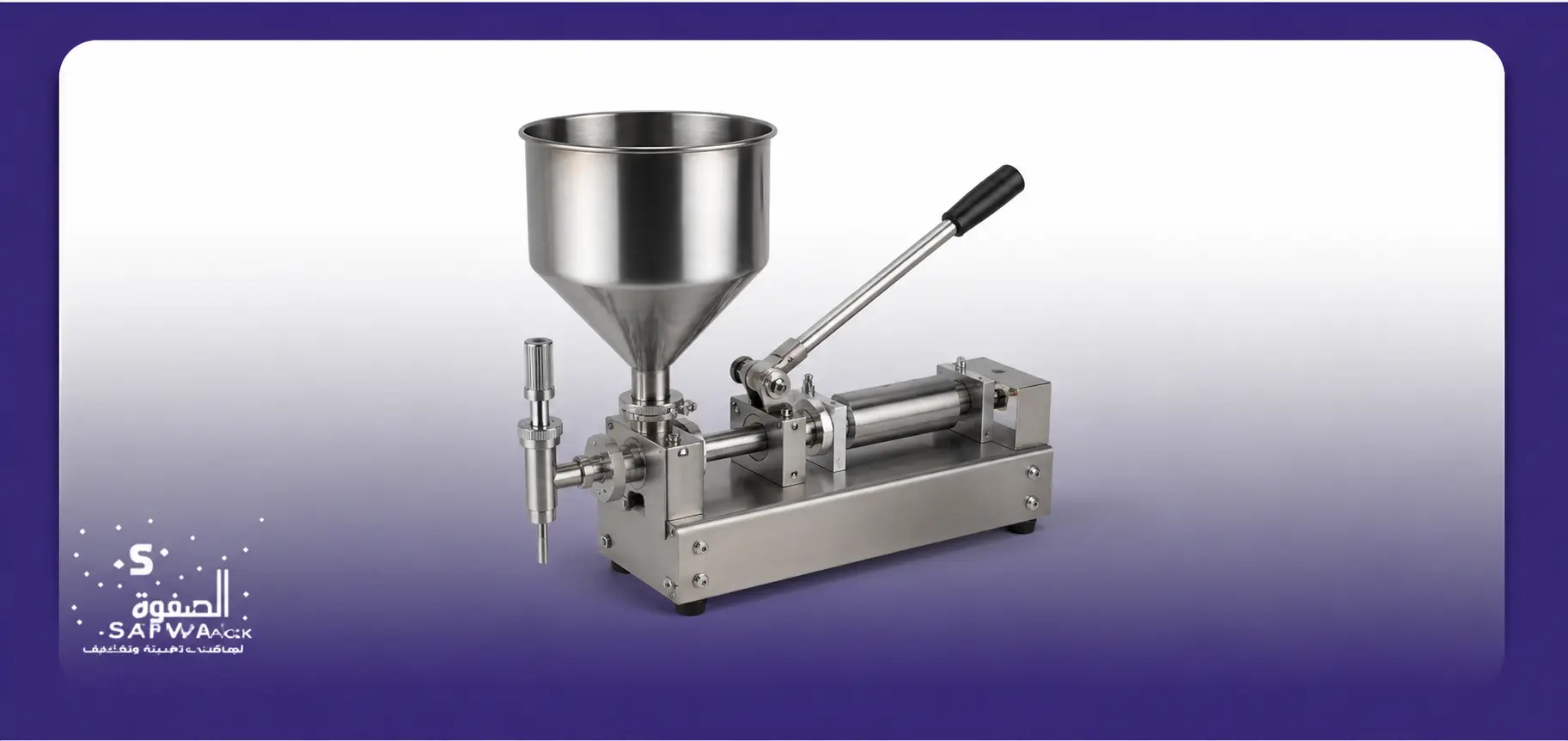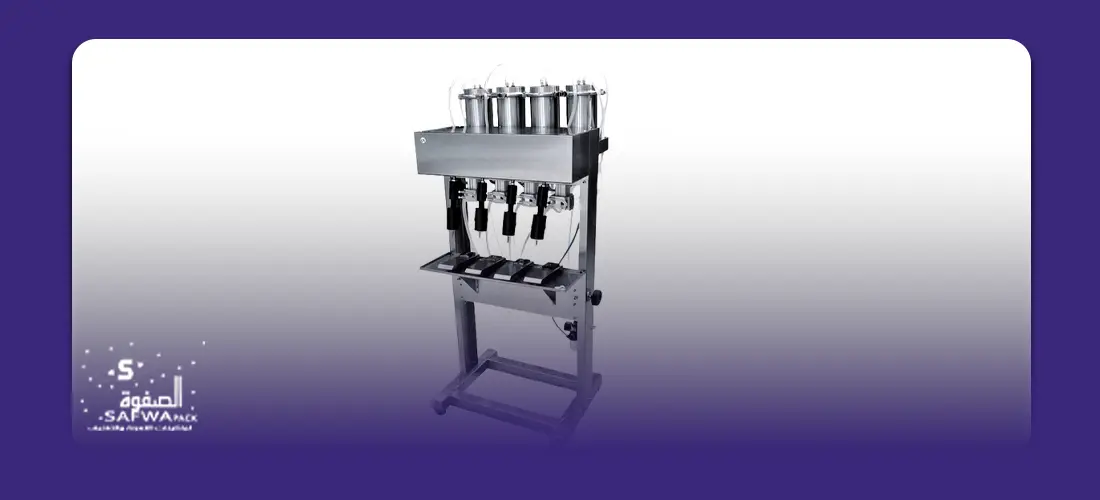
The price of a liquid filling machine depends on the product type and viscosity, container size, number of filling heads, production capacity, and required automation level. Therefore, there is no single price suitable for every project. A machine for filling water and juice differs from one used for liquid soap, oils, or sauces, while a semi-automatic machine costs less than a complete automatic liquid filling line.
The right choice is not based on the lowest price. It depends on the machine’s ability to fill your product accurately without dripping or excessive foaming while achieving the required output, reducing waste, and minimizing downtime. For this reason, El Safwa Pack begins by studying a product sample, the package, and operating requirements before recommending the suitable filling system.
To receive a quotation suitable for your project, provide the liquid type, viscosity, container size, and required production capacity.
How Much Does a Liquid Filling Machine Cost in Egypt?
The price of a liquid filling machine varies from one project to another according to the actual technical specifications. Manual or single-head machines are generally the least expensive. The cost increases when moving to a semi-automatic system, adding more filling nozzles, or integrating conveyors, capping units, cap feeders, labeling machines, and date printers.
| Equipment Type | Price Level | Production Volume | Suitable Use |
|---|---|---|---|
| Manual liquid filling machine | Lowest cost | Limited | Trials and small projects |
| Semi-automatic machine | Medium | Low to medium | Startups and gradually growing production |
| Multi-nozzle automatic machine | Relatively high | Medium to high | Factories with regular production |
| Complete liquid filling line | Custom quotation | High | Continuous production with integrated filling, capping, and labeling |
This classification is only a general guide. The cost of the same machine may change according to the filling range, pump type, or materials used in product-contact parts.
Factors That Determine the Price of a Liquid Filling Machine
The quotation depends on several interconnected factors. These details should be clearly stated in the technical offer to ensure a fair comparison between machines.
Liquid Type and Viscosity
Water, vinegar, and light juices flow quickly through pipes, while viscous products such as honey, creams, gels, sauces, shampoo, and liquid soap require different pumping force and control.
Foaming products may require bottom-up filling or gradually controlled filling speeds to reduce foam formation.
The more difficult the product is to pump—or if it contains particles—the more likely the machine will require a specialized pump, valve, and nozzle. Viscosity therefore directly affects the price and specifications of a liquid filling machine.
Filling and Measuring System
The filling system is selected according to product characteristics and required accuracy. Common systems include:
-
Volumetric filling.
-
Piston filling for viscous products.
-
Pump filling for different liquid types.
-
Weight-based filling for specific applications.
There is no single system that is best for every product. The right system is the one that provides stable accuracy with your actual liquid.
Number of Filling Heads or Nozzles
Increasing the number of nozzles allows several containers to be filled during the same cycle, raising production capacity.
However, additional filling heads require more components and controls, which increases the price. A line can begin with a number of heads suited to current production while allowing for future expansion where possible.
Filling Range and Container Size
Small-dose packages require different levels of accuracy and control from large bottles or jerrycans.
Operating several sizes, such as 50 ml, 250 ml, and 1,000 ml, also affects machine design, change parts, and settings. The minimum and maximum required filling volumes should be specified before manufacturing.
Container Type and Feeding Method
Liquids can be filled into:
-
Plastic bottles.
-
PET bottles.
-
Glass bottles.
-
Cups.
-
Doypack pouches.
The package shape determines how it is stabilized, transported, and sealed. Unstable containers or bottles with narrow openings may require guides or customized nozzles to prevent spilling.
Production Capacity
Production capacity should be expressed as the number of containers per minute or hour while specifying the container size and product type.
Theoretical speed alone is not enough because viscosity, dosage volume, and closure time affect actual output. As the required speed increases, the price of the liquid filling machine generally rises.
Automation Level
With a semi-automatic machine, the operator places the container and starts the filling cycle. In an automatic system, containers are transported, positioned, and filled consecutively.
Capping, labeling, and printing units can also be added to create a complete production line. Automation increases the initial investment but reduces manual handling at high production volumes.
Manufacturing Materials and Hygiene Requirements
Food products, cosmetics, and certain chemical products require suitable materials for all parts that come into contact with the liquid. These parts should also be easy to clean.
Depending on the product, the machine may require:
-
A tank with an agitator.
-
A heated jacket.
-
Easy-release connections for disassembly and washing.
-
Sanitary pipes and valves.
-
Corrosion-resistant materials.
These additions affect both the price and ease of operation.
Additional Stages and After-Sales Service
A complete line may include:
-
Cap-feeding unit.
-
Cap-placement and capping machines.
-
Labeling machine.
-
Date printer.
-
Collection conveyors.
Installation, commissioning, training, warranty, maintenance, and spare parts should also be considered. A low quotation that excludes these services may become more expensive once operation begins.
Types of Liquid Filling Machines by Product
Choosing the right machine starts by classifying the product as low-viscosity, medium-viscosity, highly viscous, or foaming. The container type and production rate are then determined.
Low-Viscosity Liquid Filling Machines
These machines are used for products such as water, vinegar, certain juices, disinfectants, and other free-flowing liquids.
They require a fast filling system with nozzles that prevent dripping and maintain accurate filling levels. Several filling heads can be used when higher output is required.
Medium-Viscosity Liquid Filling Machines
Applications include certain oils, detergents, shampoo, and products that flow more slowly than water.
The system must control the flow rate to prevent dripping or foam formation, while the pipe and nozzle diameters should match the product characteristics.
Viscous Liquid Filling Machines
These machines are used for:
-
Sauces.
-
Creams.
-
Gels.
-
Honey.
-
Ketchup.
-
Mayonnaise.
-
Certain industrial products.
They may use piston or pneumatic-pressure systems and can be equipped with mixing or heated tanks when required by the product.
The actual liquid should be tested because viscosity can change with temperature.
Foaming Liquid Filling Machines
Detergents and other foaming products require careful control of the filling speed and nozzle position inside the container.
Bottom-up filling or multi-stage flow control can be used to reduce foam and keep the containers and production line clean.
Semi-Automatic or Automatic Liquid Filling Machine?
The choice depends on daily demand, number of workers, operating hours, and expansion plans.
A semi-automatic machine is suitable when quantities are limited or products and containers change frequently. An automatic system is better suited to continuous and repetitive production.
| Comparison | Semi-Automatic | Automatic |
|---|---|---|
| Initial investment | Lower | Higher |
| Human intervention | Greater | Lower |
| Production capacity | Low to medium | Medium to high |
| Integration with capping and labeling | Usually separate stages | Can be integrated into one line |
| Suitable use | Small projects and flexible production | Factories with regular demand |
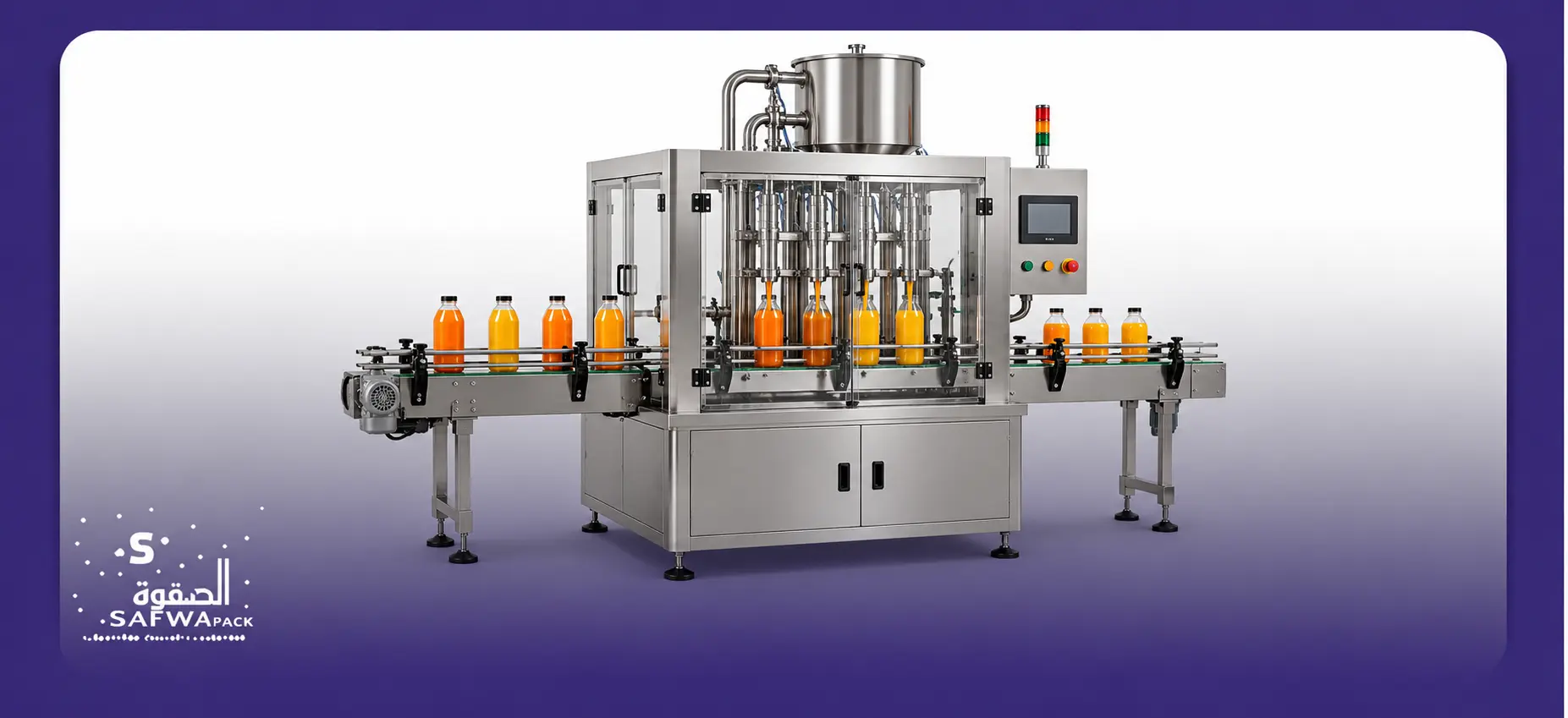
12-Nozzle Automatic Liquid Filling Line
A multi-head liquid filling line is suitable for factories that need to fill a large number of containers while maintaining consistent dosage.
This system includes 12 filling heads and can be configured for filling ranges from 100 to 1,000 ml, depending on the product, container, and approved specifications.
Its key features include:
-
Filling several containers in the same cycle.
-
Suitable for tested low- and medium-viscosity liquids.
-
Adjustable filling volume through the control panel.
-
Product-contact parts designed according to application requirements.
-
Can be integrated with conveyors, capping, and labeling units.
A multi-nozzle machine costs more than a single-head machine, but the correct comparison should be based on the number of containers produced and the filling cost per container.
Liquid Filling Machine for Doypack Pouches
Doypack or stand-up pouches are used for various liquid products. Their bottom gusset allows them to stand upright when displayed.
The machine must handle, open, fill, and seal each pouch according to the packaging material and design.
The cost varies according to:
-
Whether the pouches are premade or formed inside the production line.
-
Whether the pouch includes a spout or cap.
-
Sealing system.
-
Filling range.
-
Production speed.
Solutions can be configured for small doses from 5 to 250 ml when compatible with the product characteristics.
Important Specifications to Check Before Purchase
Before comparing the price of a liquid filling machine across several quotations, confirm that the following specifications are equivalent:
-
Products the machine can handle.
-
Minimum and maximum filling volume.
-
Dosage accuracy using the actual product.
-
Number of containers per minute at the required volume.
-
Number of filling heads.
-
Nozzle type and anti-drip system.
-
Pump or piston type.
-
Control system.
-
Materials used in product-contact parts.
-
Container types and dimensions supported by the machine.
-
Changeover and cleaning time between products.
-
Electricity and compressed-air consumption.
-
Stages and accessories included in the quotation.
-
Warranty, installation, training, and maintenance services.
Operating Cost of a Liquid Filling Machine
The purchase price is not the only cost. You should calculate:
-
Electricity and compressed-air consumption.
-
Number of workers.
-
Maintenance costs.
-
Spare parts.
-
Cleaning and product-changeover time.
-
Waste caused by dripping or dosage variation.
The filling cost per container can be calculated by adding the operating costs for one shift and dividing the total by the number of acceptable containers produced.
A more expensive machine may cost less in the long term if it is faster, more accurate, and requires less human intervention.
Standalone Machine or Complete Liquid Filling Line?
A standalone machine is suitable when the project needs only the filling stage or when capping and labeling equipment is already available.
A complete line connects several stages, including:
-
Container feeding and preparation.
-
Filling.
-
Cap placement.
-
Capping.
-
Labeling.
-
Data printing.
-
Collection.
Choose an integrated line when production quantities are stable and you want to reduce manual handling between stages.
If the project is still at an early stage or processes multiple products in small quantities, a standalone or semi-automatic machine may offer greater flexibility.
How to Choose the Right Liquid Filling Machine
-
Define the product: Specify viscosity, temperature, and whether it contains foam or particles.
-
Define the container: Provide its type, material, dimensions, and filling capacity.
-
Define production requirements: Calculate the number of containers required per hour and per shift.
-
Choose the automation level: Select manual, semi-automatic, or automatic operation according to production volume.
-
Specify the required stages: Explain whether you need capping, labeling, printing, or conveyors.
-
Request a test: Test the product and container when viscosity or foaming may affect operation.
-
Compare total costs: Consider maintenance, labor, and waste—not only the purchase price.
Why Choose El Safwa Pack for Liquid Filling Machines?
El Safwa Pack provides filling solutions that begin with studying the product characteristics, container, and required production capacity. The team then determines the suitable filling system, number of heads, and automation level.
A standalone machine can be supplied, or several stages can be integrated into a complete production line according to the project requirements.
Depending on the agreement, the service may include:
-
Design and preparation.
-
Manufacturing.
-
Installation.
-
Commissioning.
-
Staff training.
-
Technical support.
This helps you choose a machine that can be operated, maintained, and expanded effectively instead of purchasing equipment that does not suit the product.
If you are looking for the price of a liquid filling machine for a new project or want to upgrade an existing production line, provide a product sample, container sample, and required production rate to receive a technical recommendation and quotation.
Frequently Asked Questions
What Is the Price of a Liquid Filling Machine in Egypt?
The price varies according to the liquid type and viscosity, filling range, number of nozzles, production speed, automation level, and additional stages. Product and container details must be provided to receive an accurate price.
What Machine Is Suitable for Liquid Soap and Detergents?
The appropriate system depends on product viscosity, foaming rate, and container size. Some products may require a suitable pump or piston, an anti-drip nozzle, and controlled filling speed to reduce foam.
What Is the Difference Between Machines for Low-Viscosity and Viscous Liquids?
Low-viscosity liquids flow easily and can be filled using faster systems. Viscous liquids require greater pumping force, suitable valves and nozzles, and may also require a mixing or heated tank.
Can the Machine Handle More Than One Container Size?
A machine can be designed to operate within a specified size range if the containers are compatible with the operating system.
All required container sizes should be provided before manufacturing so that the necessary change parts and settings can be determined.