Food packaging and wrapping factories face a continuous challenge in achieving balance between product weight accuracy, production speed, package closure quality, and reducing waste and operating costs. Relying on manual packaging or choosing a machine unsuitable for the material's nature may lead to weight variation, package damage, frequent stoppages, and high cost per unit produced.
The solution doesn't begin with purchasing the fastest available machine, but with studying the product's characteristics, package shape, targeted production capacity, and cleaning and future expansion requirements. Project owners must also determine whether the best option is establishing a packaging line within the factory, or starting with third-party packaging services until sales stabilize. This guide provides a practical overview of the main systems used, how to select them, the fields they serve, and the criteria to help you make an informed investment decision.
What Is Meant by Food Packaging and Wrapping Factories?
Food packaging and wrapping factories include facilities that receive food products in their final or semi-final form, then perform dosage measurement, package filling, closure, operational data printing, inspection, and preparation for transport or display.
The factory may specialize in a single product, such as a sugar packaging factory, or be equipped to handle several products, such as rice, legumes, spices, flour, oils, and sauces. Line design varies according to product flow method, sensitivity to moisture or heat, package size, and required automation level.
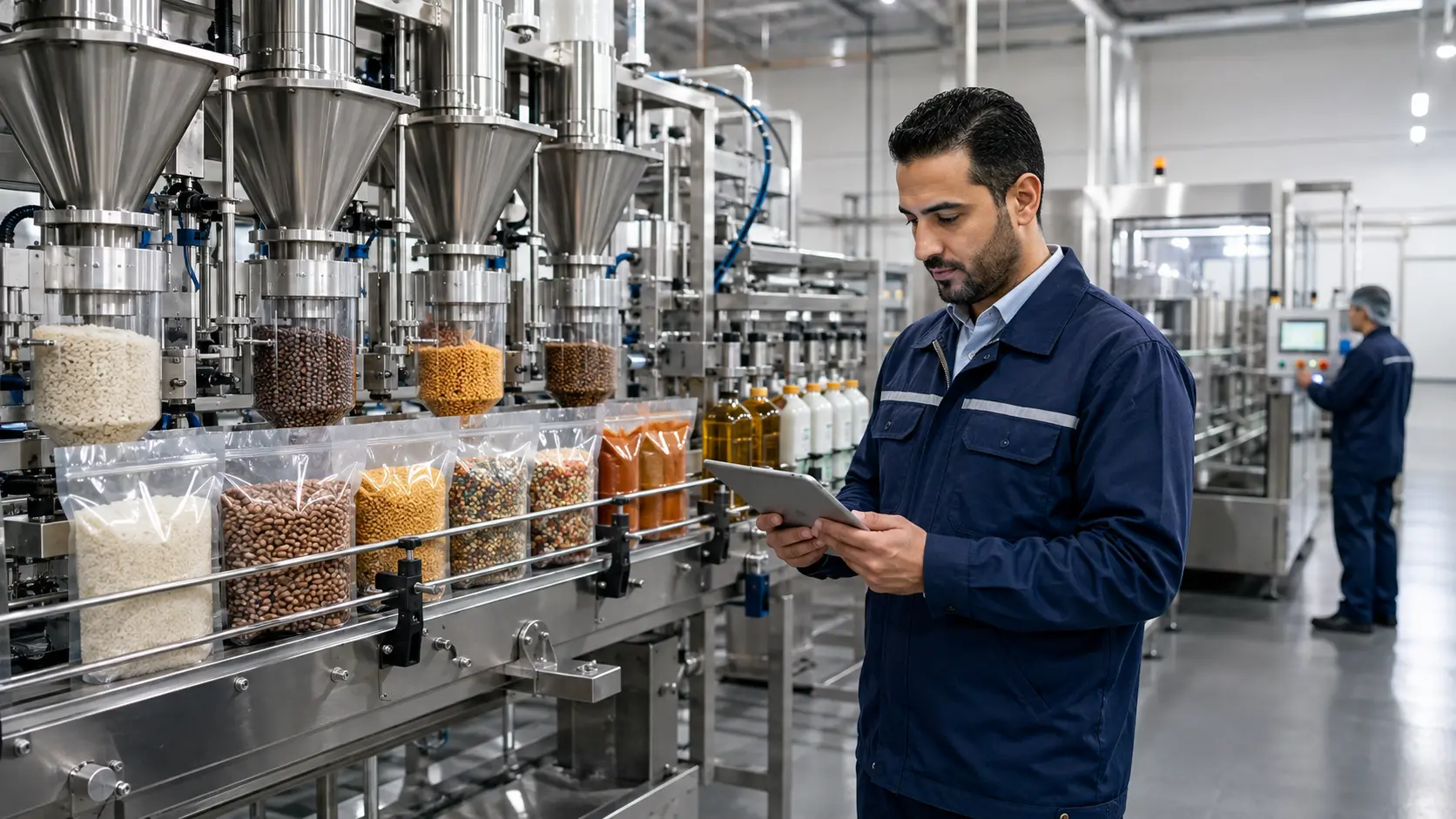
When planning to establish a food packaging and wrapping factory, the project should be viewed as an interconnected line, not a set of separate machines. The system may include a feeding unit, packaging machine, sealing system, date printer, check scale, metal detector, and then an assembly or shrink wrap system.
Basic Systems Within Food Packaging and Wrapping Factories
There's no single machine that suits all products. Food packaging and wrapping factories typically contain different systems selected according to product state and operational characteristics.
Granule Packaging Machines
Granule packaging machines are used with sugar, rice, legumes, pasta, nuts, snacks, and frozen vegetables. Volume-based packaging can be relied upon when granules are similar in size and density, while linear weight systems or multi-head scales are more suitable for irregular products or when higher accuracy and speed are needed.
Multi-head scales depend on dividing the product into small doses, then selecting the weight combination closest to the required weight. This helps increase packaging speed and reduce unintended overweight, especially in food packaging factories dealing with high-cost or size-variable products.
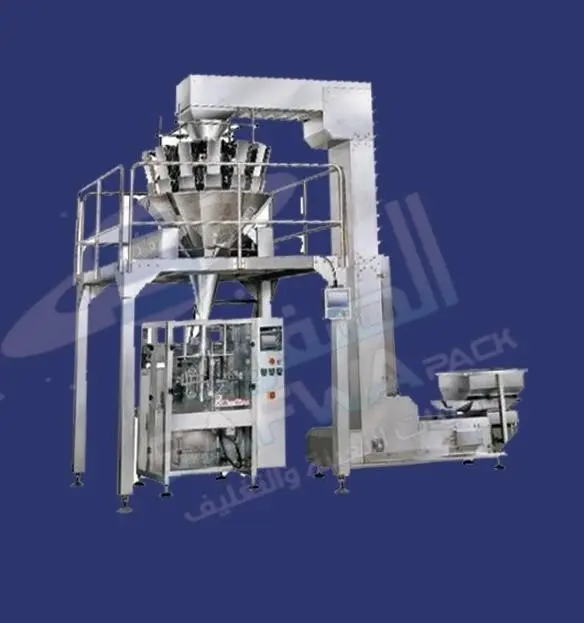
Practical Example: 10-Head Weight Filling Line from Al-Safwah
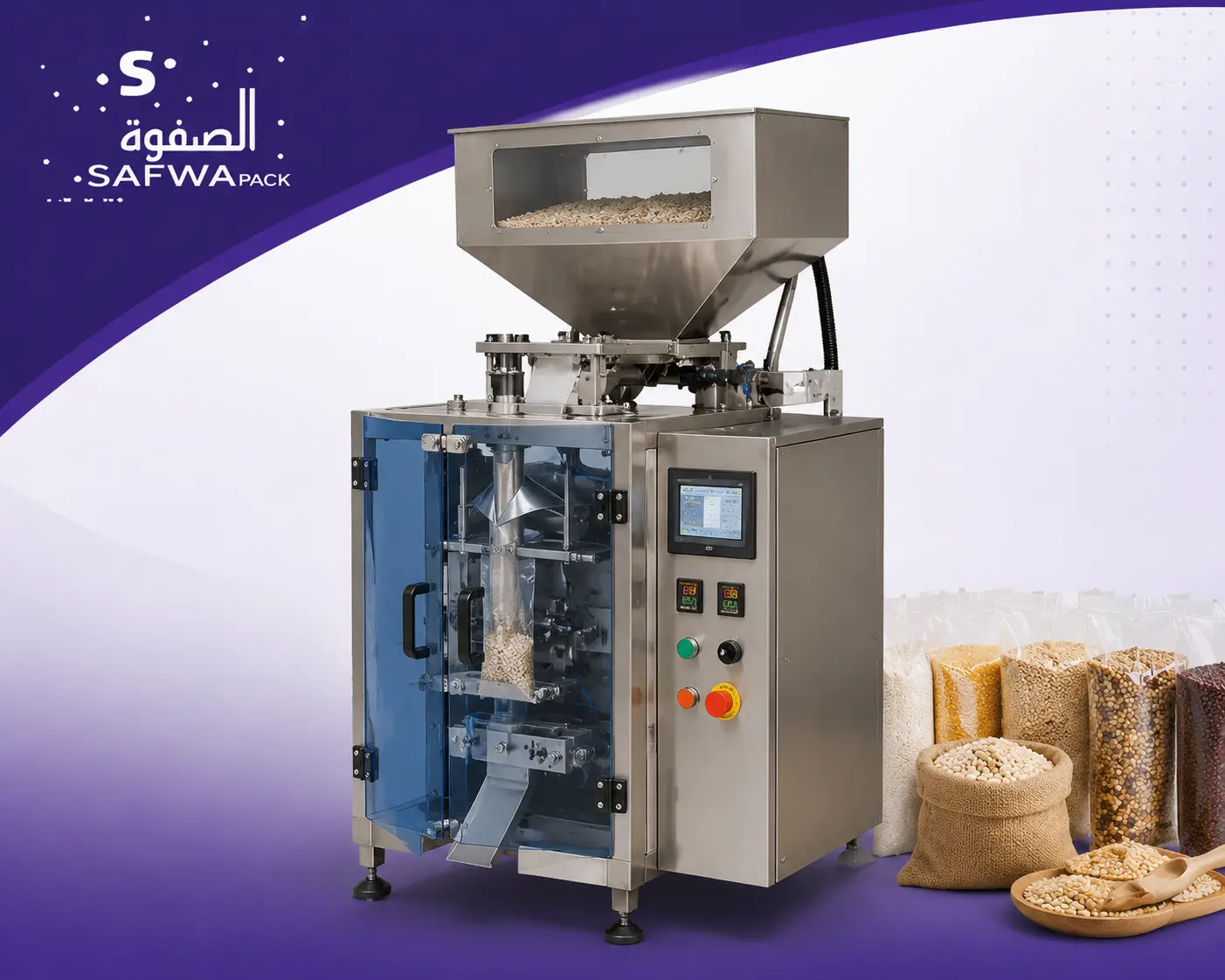
An appropriate solution for medium and high-production factories is the 10-head weight filling line from 10 to 1000 grams available from Al-Safwah. The line operates through 10 weight heads, covering a filling range of 10 to 1000 grams, with approximate production capacity between 20 and 60 bags per minute depending on product size and flow characteristics.
The line features a stainless steel structure, PLC control system with touchscreen, and ability to adjust filling heads to achieve target weight. It's suitable for packaging sugar, grains, chips, snacks, and frozen vegetables, making it a practical choice when setting up a sugar packaging factory or a line handling multiple food products.
However, the line shouldn't be chosen based solely on weight range and speed. It's necessary to conduct a trial using the actual product; because filling speed and accuracy are affected by granule size, density, moisture content, and adhesiveness or brittleness. Additionally, confirm that scale speed is compatible with bag forming machine and sealing system so the line operates as a balanced production unit.
Powder Packaging Machines
These are used with flour, spices, cocoa, milk powder, starch, and other powders. One of the most common systems is the auger filler machine, which controls dosage through the number of auger rotations and its speed.
The design should include a system for moving product inside the hopper to prevent clumping or gap formation, while controlling airborne dust, and allowing easy disassembly and cleaning of food-contact parts. Auger filling systems are used industrially with powders and fine granules, and can be integrated with bag forming, filling, and sealing machines.
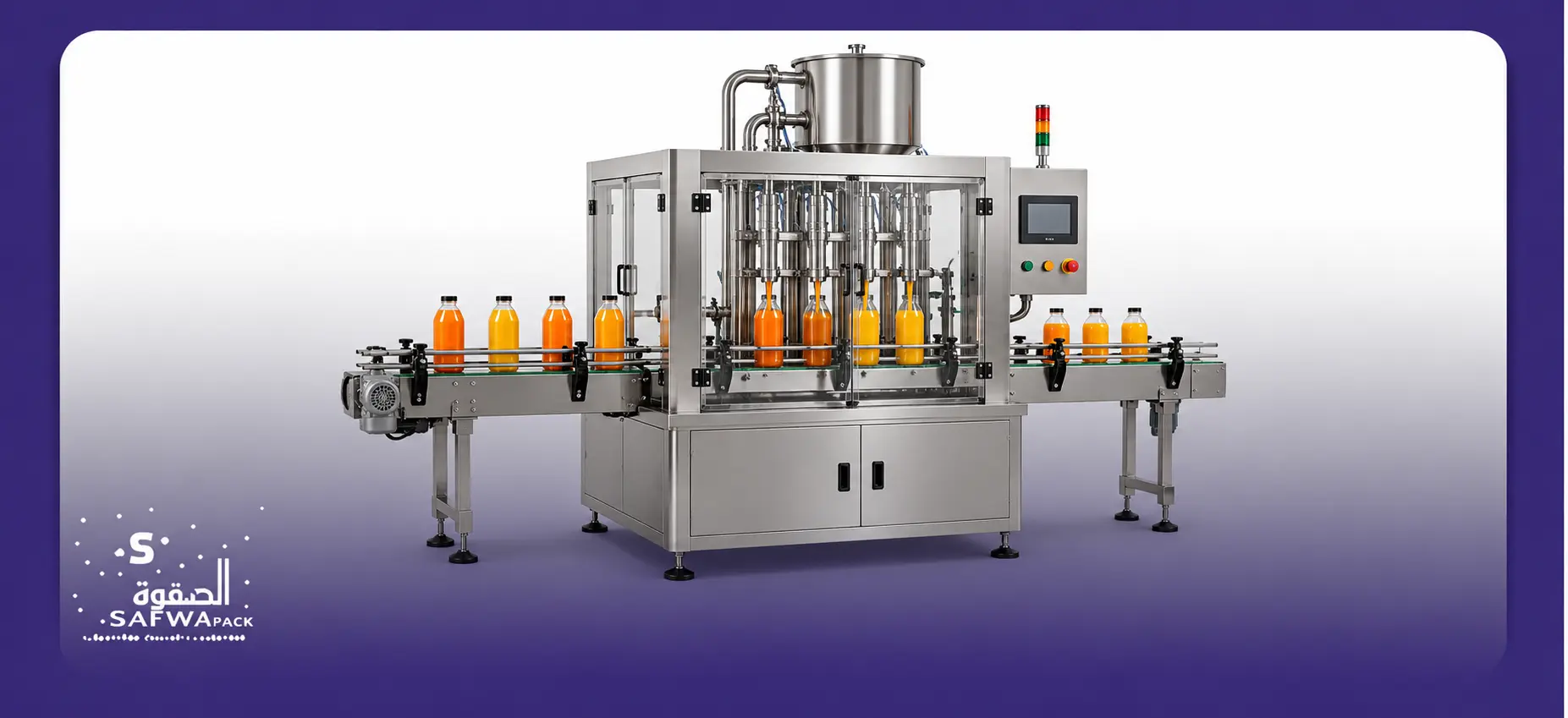
Liquid Packaging Machines
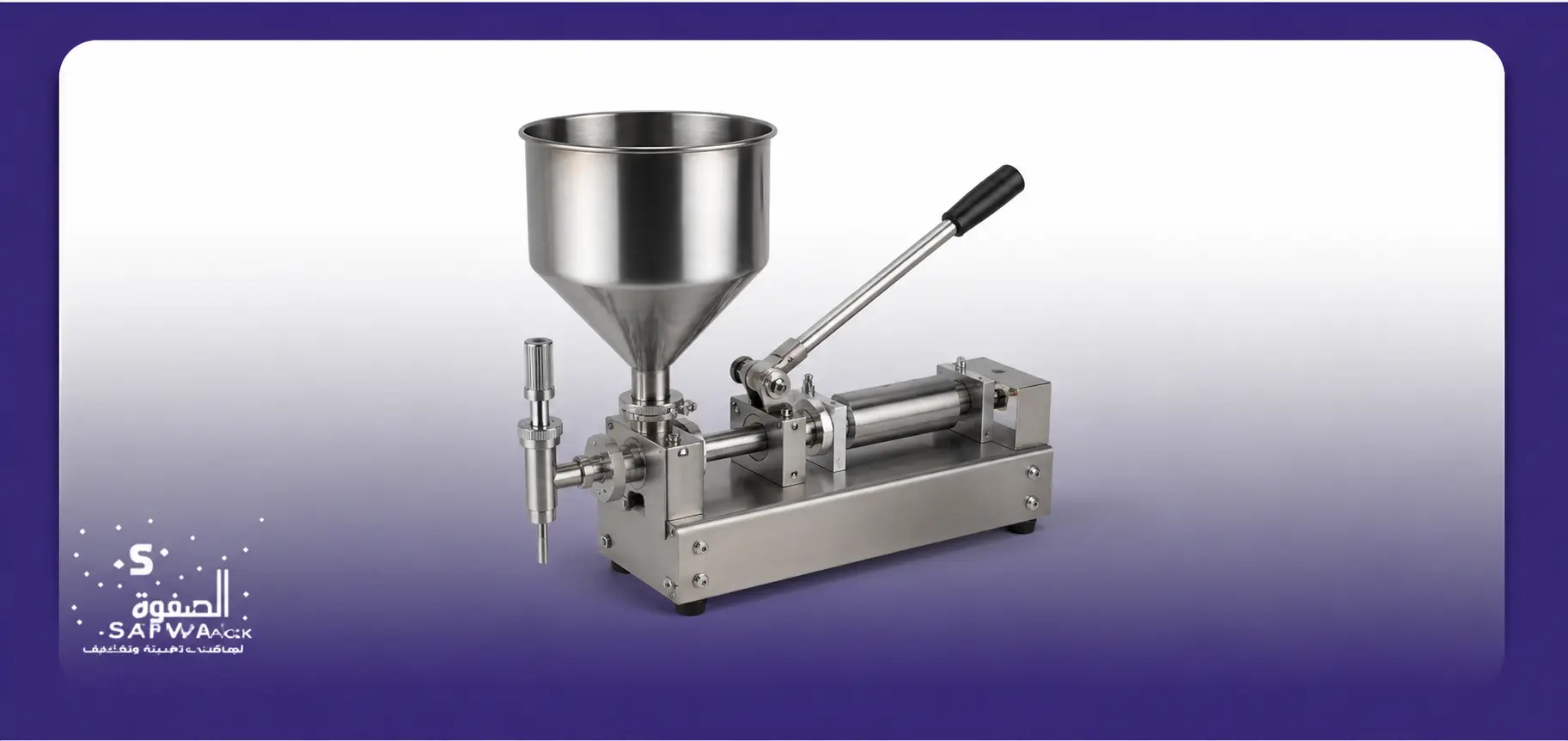
The appropriate machine varies according to liquid viscosity. Light liquids, such as water and some juices, can be packaged with gravity-based or flow systems, while sauces, honey, and food creams require pumps or presses that control dosage and handle higher viscosity.
Important specifications include anti-drip nozzles, adjustable filling volume, easy tank and pipe cleaning, and food-grade suitability of food-contact parts. Consideration must also be given to solid pieces or components within the product, such as vegetable-containing sauces.
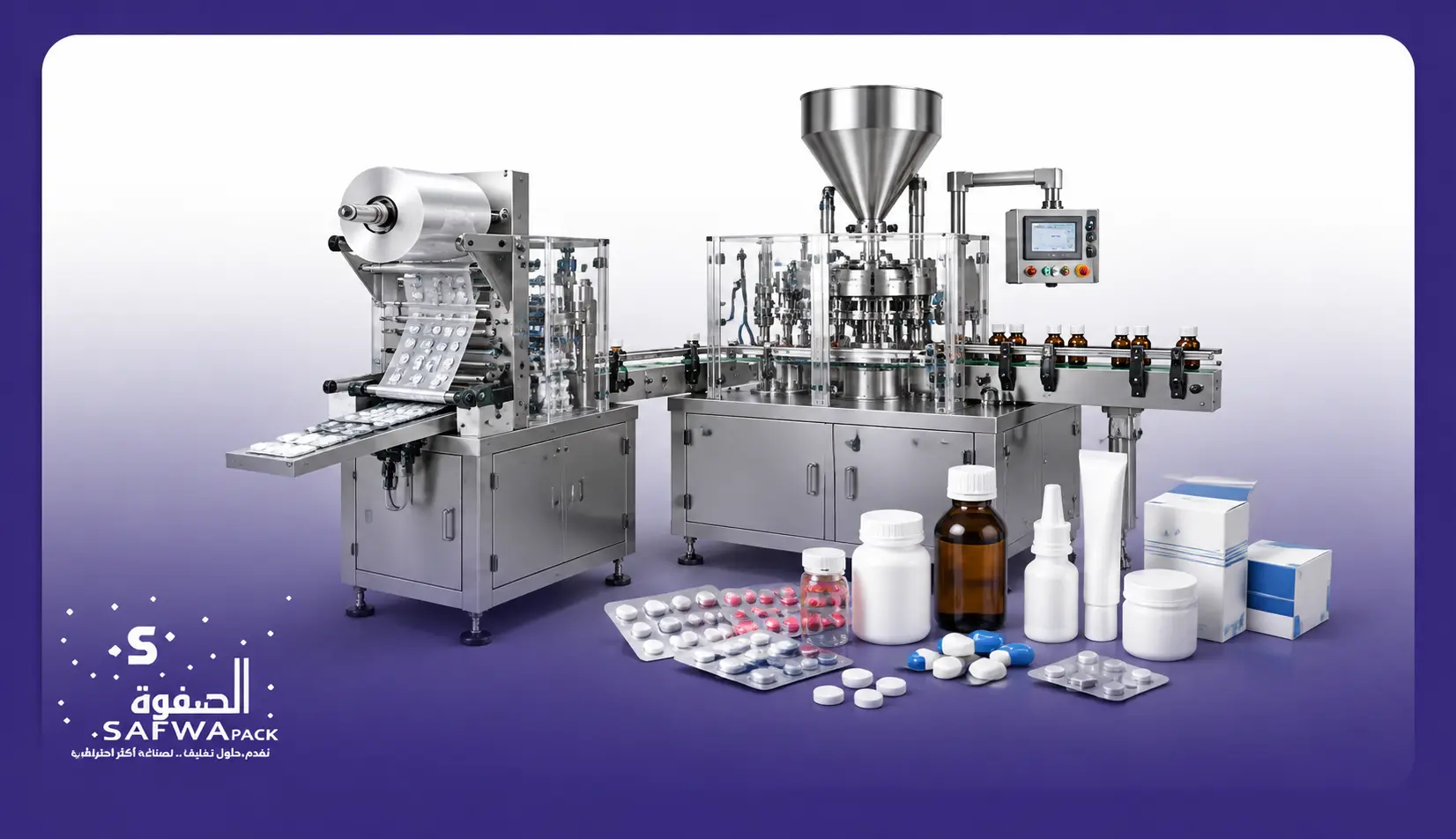
Vacuum and Thermoforming Machines
Vacuum and tray-sealing systems and thermoforming are used with meat, cheese, poultry, ready meals, and some refrigerated products. Thermoforming machines heat and shape plastic film inside a mold, then place the product and close the package after air removal or atmosphere modification inside according to the application.
A vacuum thermoforming machine for plastic allows producing consistent packages within a continuous line. MAP (Modified Atmosphere Packaging) systems are also used to replace air with a gas mixture suitable for the product, but gas composition, film, and shelf life must be determined through actual tests, not general assumptions.
Advantages of Relying on Integrated Packaging Lines
Developing food packaging factories using interconnected lines helps achieve a set of operational advantages:
- Fixing product weight or volume within each package.
- Reducing unintended weight increase and minimizing waste.
- Increasing production capacity compared to manual packaging.
- Reducing product handling by hand during packaging.
- Improving seal quality and final package appearance.
- Facilitating operational data and batch recording.
- Integrating printing, inspection, and metal detection within the line.
- Reducing time lost in transferring product between stages.
Actual results depend on line design quality and how well component speeds are compatible. Having a fast filling machine doesn't achieve expected benefits if the feeding system or sealing is slower.
How to Choose the Right Packaging and Wrapping Line
When comparing food packaging and wrapping factory solutions, don't let purchase price be the only criterion. It's better to evaluate total operating cost, including raw material and energy consumption, maintenance, spare parts, downtime, and required labor.
1. Analyze Product Characteristics
Determine whether the product is liquid, powder, or granules, then accurately record its characteristics: viscosity, grain size, density, moisture content, packaging temperature, and tendency to clump or create dust.
Two products may look similar but require different systems due to flow or density differences. Therefore, conduct a trial using the actual product before finalizing the design.
2. Specify Package and Wrapping Material
Determine whether packaging will be in bags, plastic containers, bottles, jars, or trays. Test wrapping material compatibility with sealing temperature, moisture, oils, and storage and transport method.
Also specify required dimensions and weights and possibility of size changes. The more package sizes, the more important changeover speed and setting adjustment become.
3. Calculate Realistic Production Capacity
Don't rely solely on theoretical speed written in machine specifications. Calculate required production per shift, frequency of product changes, cleaning times, material supply stoppages, and labor efficiency.
Line components should be balanced, from feeding to final assembly, with a margin allowing future demand increase without requiring complete line replacement.
4. Evaluate Cleanliness and Ease of Cleaning
Equipment contacting food requires design allowing access to product accumulation areas, part disassembly and cleaning without complex procedures. Separation between products should occur when changing production, especially when handling allergens or products with strong odors and colors.
Good manufacturing practices include attention to facility, equipment, and food-contact surface cleanliness, control of production, maintenance and personal hygiene processes for workers.
5. Review Technical Support and Expansion Capability
Verify installation, training, maintenance, and spare parts availability, and possibility of later connecting the machine to conveyors, printers, or additional inspection systems.
Reviewing food packaging machine prices helps understand cost-affecting elements, such as production capacity, number of filling heads, automation level, manufacturing material, and control system.
Sectors Served by Packaging and Wrapping Factories
Food packaging and wrapping factories serve multiple sectors, most notably:
- Sugar, rice, grains, and legumes.
- Spices, herbs, flour, and powder materials.
- Nuts, candy, chips, and snacks.
- Frozen vegetables and fruit.
- Oils, juices, sauces, and honey.
- Dairy, yogurt, and beverages in cups.
- Meat, poultry, fish, and cheese.
- Baked goods and ready meals.
Each sector's needs differ in measurement method, production rate, and level of package protection required. You can review the food packaging machinery guide to learn more about systems suitable for each product.
When Is Third-Party Packaging the Best Solution?
Not every new project needs to establish a complete production line from day one. Third-party packaging services may be more appropriate when testing a new product, operating with seasonal quantities, launching several varieties in limited quantities, or wanting to direct capital to marketing and distribution.
Before contracting, clear specifications must be established including package weight, material type, tolerance ratio, product receipt and delivery method, production numbering system, cleaning procedures between products, and responsibility for supplying packages and labels.
As demand grows and quantities stabilize, you can compare continuous service cost with owning an in-house line. Some food packaging factories in Egypt offer third-party services, while others specialize only in machine supply. Al-Safwah combines line setup solutions and packaging and wrapping services for projects not wanting immediate equipment investment.
How Does Al-Safwah Meet Food Packaging Factory Needs?
Choosing the right supplier doesn't depend solely on the number of machines offered, but on its ability to understand the product and build a balanced line. Al-Safwah provides a diverse range of powder, liquid, and granule packaging solutions, alongside vacuum, MAP, sealing, shrink wrap, printing, labeling, and metal detection systems.
This variety allows studying the project as a single system, from determining the appropriate measurement method to package closure and preparation for handling. You can choose an independent machine for limited production projects, or design a more integrated line for factories targeting continuous operation and expansion.
Having a local team for operation, support, and maintenance is a practical factor when comparing food packaging factories in Egypt and equipment suppliers; because fault response speed and spare parts availability directly affect production continuity. Al-Safwah's page displays a large collection of granule, powder, liquid, wrapping, and inspection machines that can be integrated according to project nature.
Establish Your Packaging Project on Clear Technical Basis
Success of food packaging and wrapping factories begins with defining product characteristics, required capacity, and package shape, then selecting a system achieving accuracy, easy cleaning, and expansion possibility, instead of purchasing a machine based only on price or advertised speed.
You can review Al-Safwah's solutions through the products page, or proceed to our contact page to request technical consultation regarding establishing a new line, developing an existing line, or benefiting from third-party packaging and wrapping services.
Frequently Asked Questions About Food Packaging
What are the main factors affecting packaging machine selection?
The main factors include product type (liquid, powder, granules), package dimensions, required production rate, type of wrapping material, automation level needed, and ease of cleaning requirements.
Can we start with manual packaging and upgrade later?
Yes, manual packaging suits initial stages or small volumes. However, as production increases, manual operations may become a production bottleneck requiring investment in automated solutions.
What should we test before buying a packaging line?
Test the actual product with proposed packaging material and machine to verify:
- Weight accuracy and consistency
- Seal quality
- Machine speed compatibility with your team
- Ease of changing package sizes
- Actual waste and efficiency
How important is after-sales support?
Very important. Support quality directly affects production continuity. Verify availability of spare parts, technical support response time, and training provided.
Is it better to buy one large machine or build an integrated line?
It depends on your production volume and product variety. Single machines suit limited or variable production, while integrated lines are more efficient for high, continuous production.
What makes a good packaging line design?
Good design ensures:
- Balance between all component speeds
- Minimal product handling
- Easy cleaning and changeover
- Quality control integration
- Expansion capability
- Operator comfort and safety
How do we ensure food safety in packaging operations?
Follow these practices:
- Use food-grade materials and machines
- Maintain strict hygiene standards
- Regular cleaning and sanitization
- Metal detection and quality checks
- Proper personnel training
- Compliance with local food safety regulations
Can existing equipment be integrated with new machines?
Often yes, but requires technical evaluation of:
- Height and speed compatibility
- Control system integration
- Space availability
- Power requirements
Contact Al-Safwah for technical assessment before purchasing.